
Last updated November 15, 2026
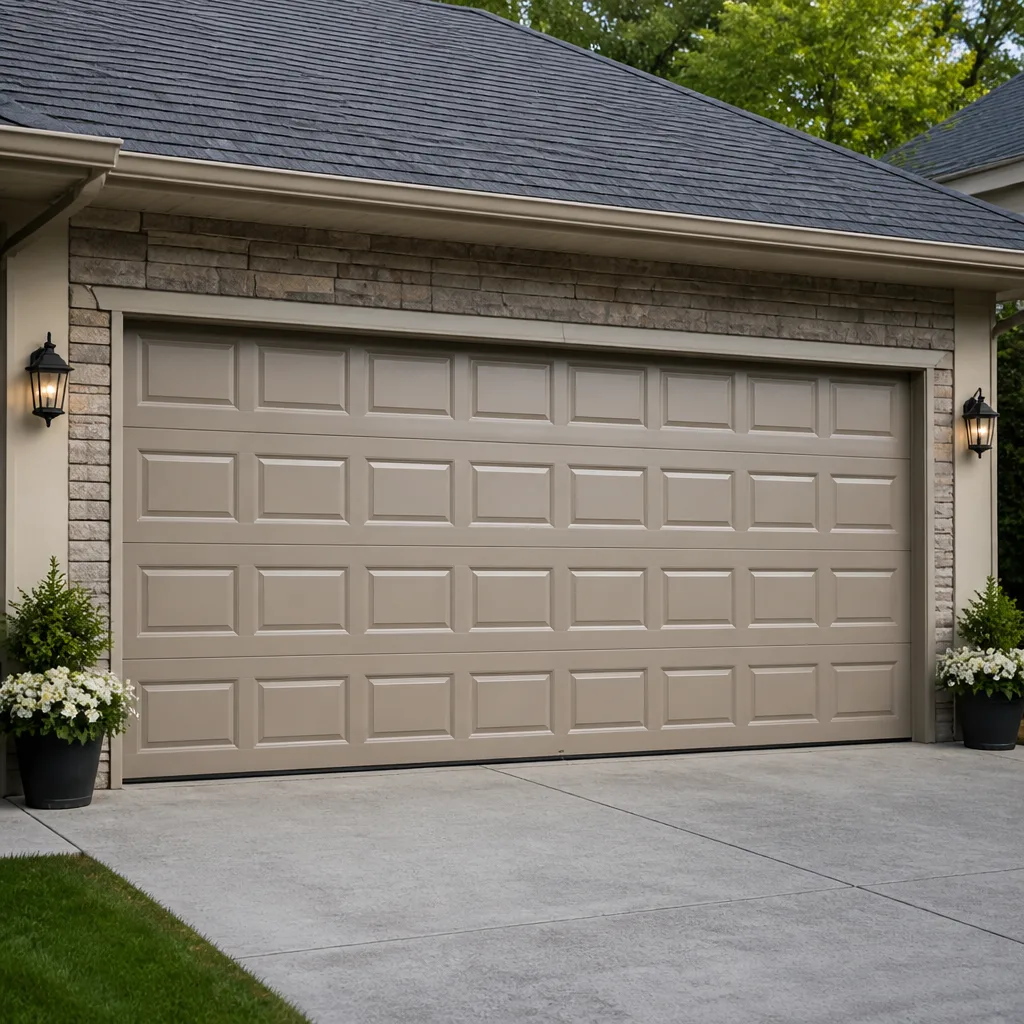 Raised-panel steel
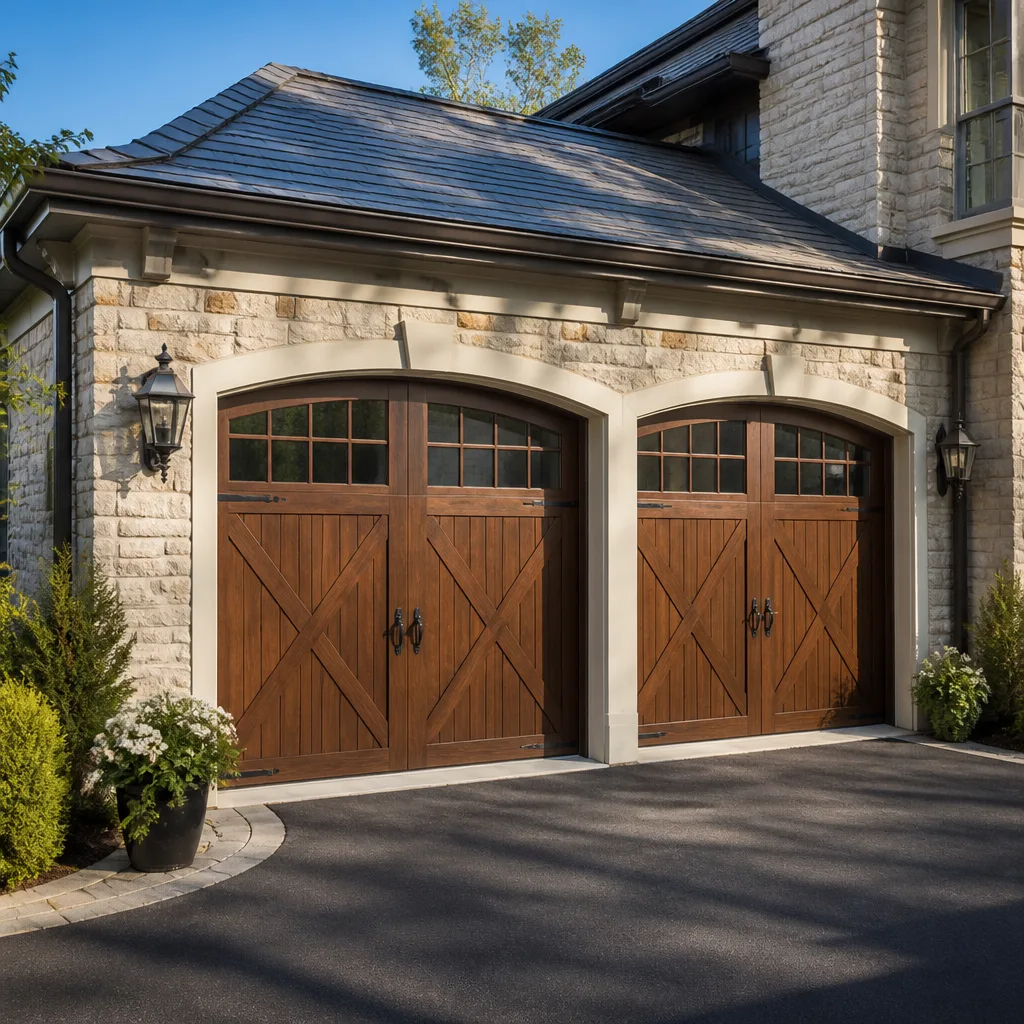 Carriage house
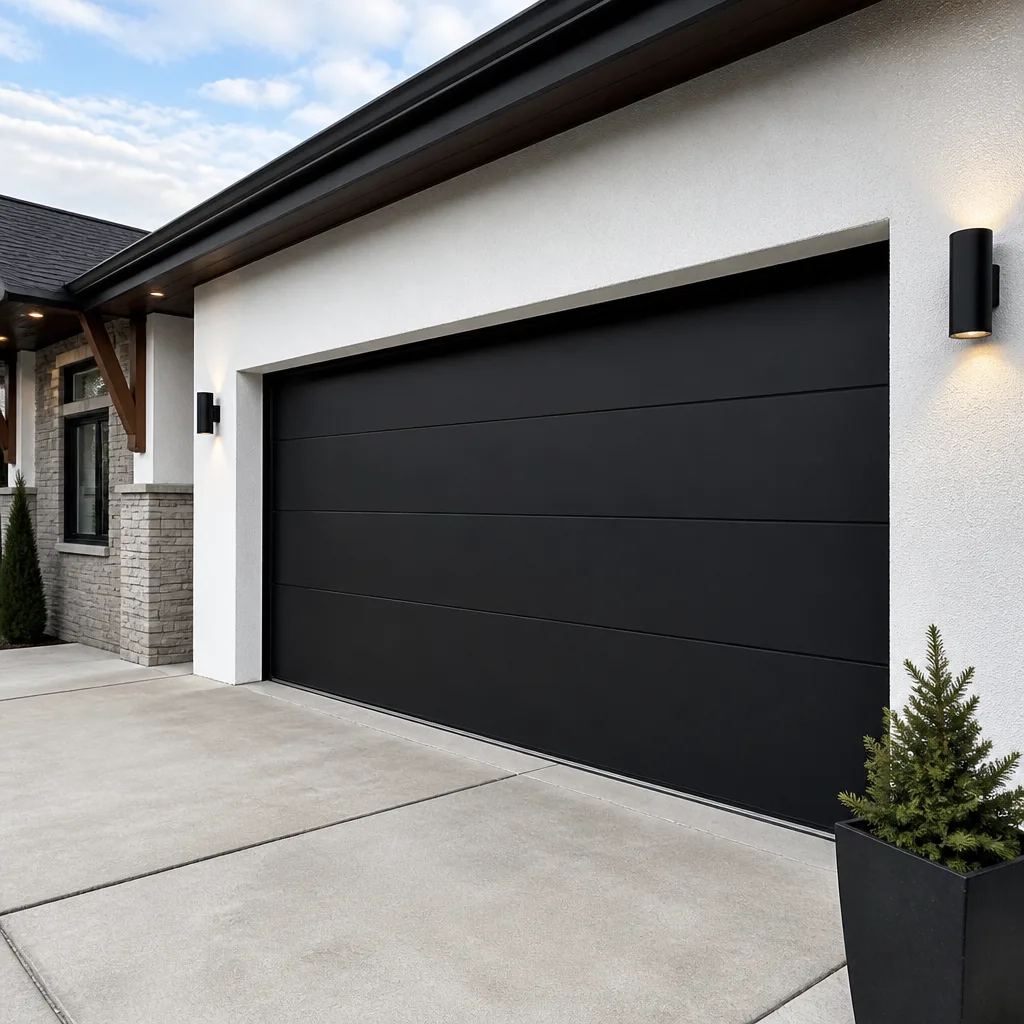 Modern flush
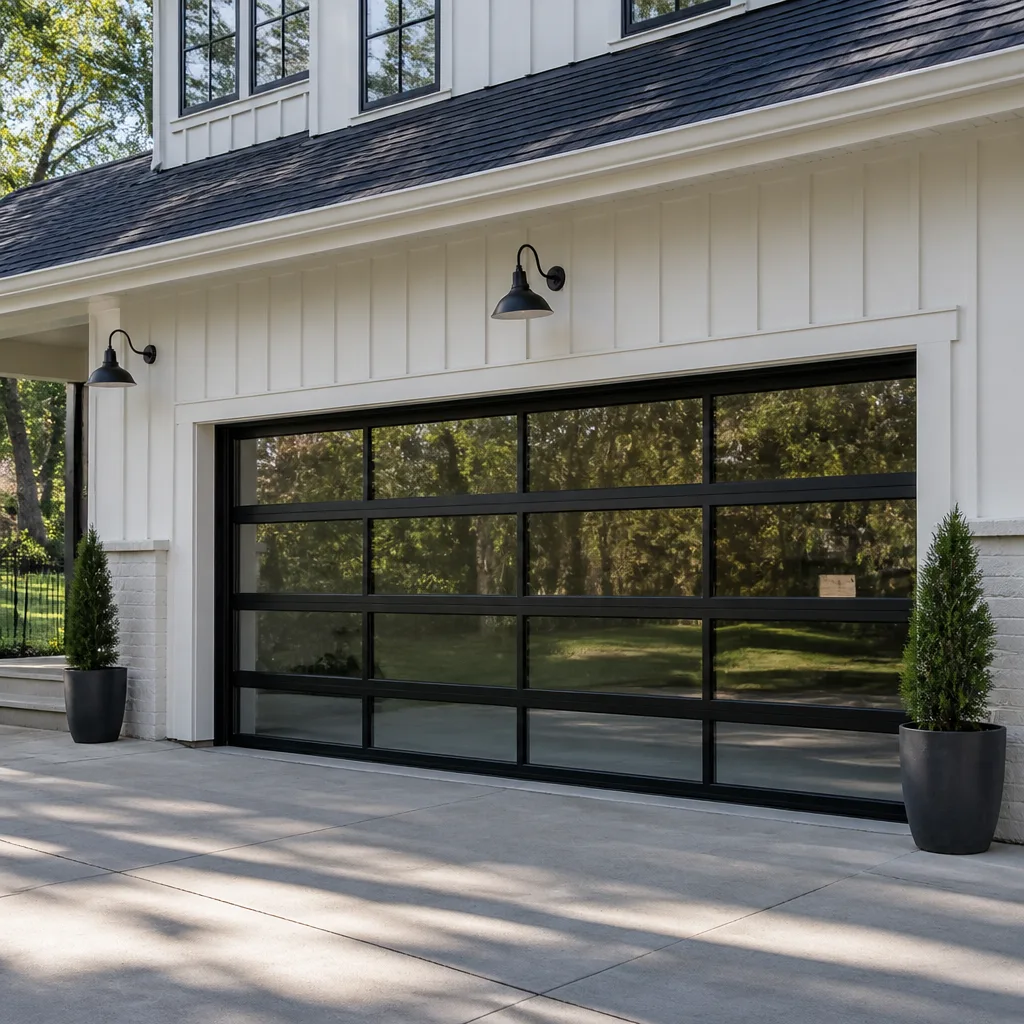 Full-view glass
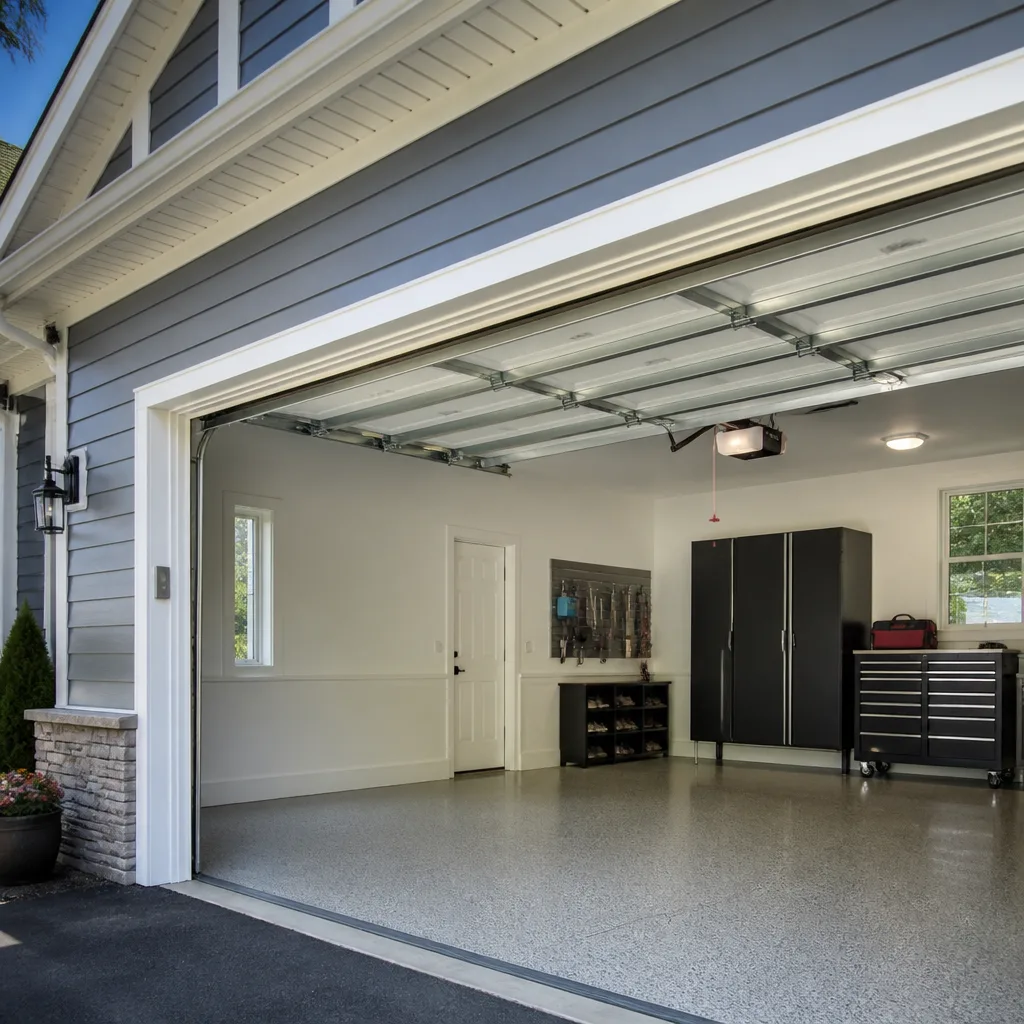 LiftMaster openers
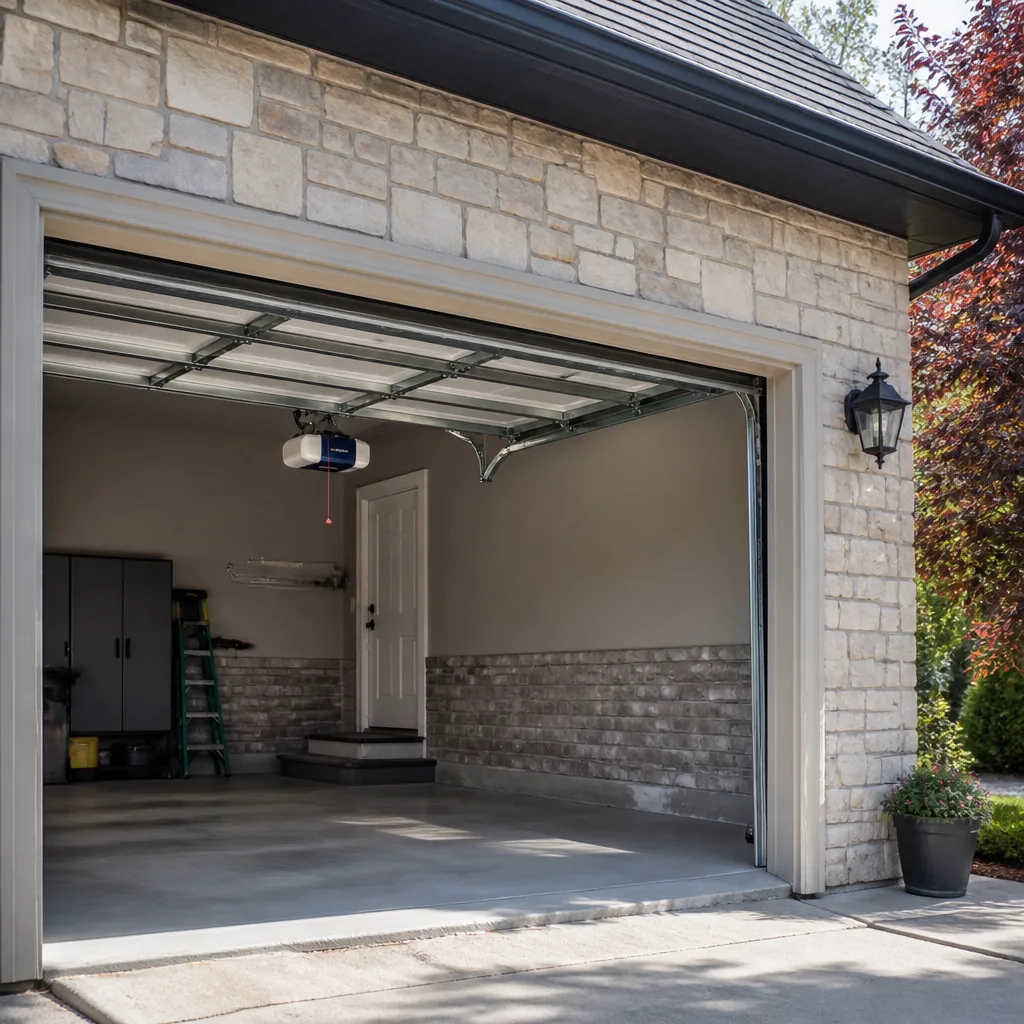 Chamberlain openers
Full 25-point door and opener safety check with every visit - springs, cables, rollers, tracks, and your LiftMaster or Chamberlain opener included
You get a price before we start. It does not change when the pro arrives.
Get your free estimateThe Complete Guide to Garage Doors in Stamford
Most garage door advice you’ll find online is written for “the Northeast” as one big blur, which is a problem when you live here. A door in Stamford faces two very different pressures across a single year: humid summer air that works its way into every moving part, and a February freeze-thaw cycle that swells wood, warps tracks, and cracks old seals. Generic guides miss both, and they also miss the way housing here varies block by block, from capes near the water to colonials up north to shared garages downtown. This guide starts with Stamford’s actual conditions. You’ll learn what fails and why, which materials hold up, what the code asks for, and how to decide whether to repair, replace, or upgrade your door.
Quick Answer
Garage doors in Stamford need service more often than doors in inland Connecticut because humid air and hard freeze-thaw cycles wear out springs, cables, and bottom seals faster. Most homeowners can extend door life with annual lubrication, seasonal balance checks, and prompt repair of small track and roller problems. When a spring snaps, a door comes off its track, or an opener stops responding, a trained technician should handle it. For a new door or opener, get a free measure and a written price before anything is ordered.
Styles & brands we work with
- Raised-panel steel
- Carriage house
- Modern flush
- Full-view glass
- LiftMaster openers
- Chamberlain openers
Table of Contents
- Why Stamford Garage Doors Face Different Conditions
- Garage Door Styles Across Stamford’s Neighborhoods
- Which Door Materials Hold Up in This Climate
- Connecticut Code vs. What Stamford Adds
- A Brand-Agnostic Look at What’s in Your Garage
- Repair, Replace, or Upgrade: A Decision Tree
- A Seasonal Maintenance Routine That Works Here
- What You Should Never Touch Yourself
Why Stamford Garage Doors Face Different Conditions
The single biggest misconception about garage doors is that they’re passive objects that only break when something physically hits them. In reality, a garage door is a mechanical system that moves thousands of times over its life, and it reacts to weather the whole time. Stamford sits in a spot where that weather is unusually demanding. Summer humidity is high enough that untreated steel hardware can start to show surface rust, and bottom seals that stay damp against a concrete floor can stiffen and tear. Winter brings repeated freeze-thaw. Water gets into a hairline gap, freezes overnight, expands, and widens the gap. Then it thaws and the cycle repeats. Over a few seasons that’s how a track goes out of alignment and a wooden panel starts to warp.
Springs and cables carry the brunt of it. A torsion spring is under constant tension, and every temperature swing changes how that metal behaves. Cables running through pulleys pick up moisture and grit, and the friction wears them faster. That’s the practical difference between Stamford and an inland town: your hardware is working against more moisture and more thermal movement, so the same door tends to need attention sooner.
None of this means you’re doomed to constant repairs. It means maintenance matters more here than a national checklist suggests. A door that gets lubricated and checked twice a year will typically outlast one that gets ignored until something breaks. If you’re already hearing a rattle or seeing a sag, our garage door repair team can look at it before a small issue turns into a snapped spring.
Garage Door Styles Across Stamford’s Neighborhoods
Drive through Stamford and the housing stock changes fast, and so does what’s hanging over each driveway. The door that suits a Shippan cape is rarely the door that suits a North Stamford colonial, and a downtown condo with a shared garage has different needs entirely. Knowing which category your home falls into helps you ask better questions when you’re getting quotes.
Shippan and the near-water neighborhoods: Many homes here are older capes and smaller colonials with single-car or one-and-a-half-car garages. You’ll see a lot of traditional raised-panel steel and wood doors, often original or replaced once. Because these homes sit closer to open air and shifting weather, doors here tend to show wear on bottom seals and hardware first. Homeowners typically want a door that fits the period look of the house without the upkeep of real wood.
North Stamford: Larger colonials and contemporaries with two-car garages are common, and many have wide doors that put more load on springs and openers. These doors are heavier, which means spring sizing and opener capacity matter more. If an opener was sized for a lighter door and the door was later replaced with a heavier one, the motor works harder than it should.
Downtown and condo buildings: Shared garages and tuck-under parking bring a different set of concerns. Overhead clearance may be tight, and doors serve many users, so reliability and quiet operation count. Opener problems are common in shared settings because the equipment runs far more cycles than a residential door.
If you’re not sure which category your door falls into, that’s fine. A technician can tell you in a few minutes what you’ve got, and it costs nothing to ask.
Which Door Materials Hold Up in This Climate
Brand marketing is loud about finishes and quiet about how a material behaves after five winters. Here’s the practical version for Stamford, organized by what actually matters: moisture resistance, weight, and how much upkeep you’re willing to do.
- Insulated steel: The most common choice here, and for good reason. Steel with a factory finish resists moisture well, holds its shape through freeze-thaw, and needs little beyond occasional cleaning. The weak points are the bottom edge and any scratched paint, so touch up bare spots when you see them.
- Aluminum: Light and rust-resistant, which suits humid summers. It dents more easily than steel, so it’s a better fit for a door that isn’t bumped regularly.
- Wood and wood-composite: Beautiful on a period cape, but wood is the material most affected by moisture cycling. It needs sealing and repainting on a schedule, and a missed season shows up as swelling or warping. If you love the look, plan for the upkeep.
- Vinyl and composite overlays: Good moisture resistance with a wood-like look. Performance depends heavily on the core material underneath, so ask what’s inside the panel, not just what’s on the face.
- Glass and full-view doors: Popular on contemporary homes. The frame material and glazing matter more than the glass itself; aluminum frames with proper seals handle humidity well.
A material that’s wrong for your house usually announces itself within a few seasons. A door that sticks, warps at the bottom, or shows rust at the hardware is telling you the material and the climate aren’t getting along. When you’re comparing options, ask about the panel core, the finish warranty, and how the bottom seal is constructed. Those details decide how a door ages in Stamford, not the logo on the box.
Connecticut Code vs. What Stamford Adds
Building codes are where a lot of online guides get vague, so let’s be clear about the limits of what any guide can tell you. A garage door replacement is a structural and safety-related change, and it’s the kind of work that generally requires a permit. The specific requirements come from the Connecticut State Building Code, and the City of Stamford’s building department applies its own permit process and inspection steps on top. We don’t publish code section numbers because they change and because your project’s specifics matter. The right move is always to call the Stamford building department and ask directly.
Here’s how the process usually goes for a replacement:
- Confirm permit requirements. Call the city’s building department before you order anything. Ask what a residential garage door replacement requires and whether an inspection is part of the process.
- Get the door measured on site. Rough openings vary, especially in older Stamford homes. A written measure protects you from ordering a door that doesn’t fit.
- Review safety features. Modern openers include entrapment protection, and a replacement door should be balanced and tested before it’s put into service.
- Schedule the inspection if one is required. Your installer should be able to tell you what the inspection covers and make sure the finished work is ready for it.
- Keep your paperwork. Permits and inspection records are worth holding onto for resale and for any future insurance questions.
One caution: don’t let a salesperson tell you a permit “isn’t needed” for a full replacement without confirming it with the city. It’s a two-minute phone call and it protects you.
A Brand-Agnostic Look at What’s in Your Garage
Almost every garage in Stamford already has a brand attached to it, usually stamped on the opener motor housing or printed on a label inside the door. The question homeowners ask most is whether they’re locked into that brand for service. You’re not, and you shouldn’t be. A door is a mechanical assembly, and an opener is an electronic one. A technician who knows the systems can diagnose both regardless of the label.
We work on the brand you already have. Our technicians are certified to service eight major systems, including Raynor and LiftMaster, along with Chamberlain and Genie openers and doors from Clopay, Amarr, Wayne Dalton, and Craftsman. That range matters because it removes the pressure you get from a dealer who only services what they sell. If your opener is a Genie and the door is a Wayne Dalton, you don’t need to replace either to get help. We diagnose what’s actually failing, then give you honest options.
That’s also where the single-trade focus pays off. Garage doors are all we do. Every technician works on doors and openers, not a rotating list of home repairs, so diagnosis tends to be faster and the fixes tend to hold. When an opener and a door are both aging, we can look at both in the same visit and tell you which one is the real problem. For opener-specific issues, our garage door opener repair team handles everything from a remote that won’t pair to a motor that strains against a heavy door.
Repair, Replace, or Upgrade: A Decision Tree
This is the question that saves homeowners the most money and the most second-guessing. Use the steps below in order. Each one narrows the decision.
- Is the door structurally sound? Look for warping, cracked panels, rust-through at the bottom edge, and a track that’s visibly bent. If the door itself is failing, repairs become a series of patches and replacement is usually the better use of money.
- Is the failure mechanical or cosmetic? A snapped spring, a frayed cable, a broken roller, or a door off its track is mechanical and almost always repairable. A faded finish or a scratched panel is cosmetic and can wait.
- How old is the door, and how many repairs has it had? A single repair on a sound door is normal. A door that needs a different fix every season is telling you something.
- Does the opener match the door? If you’ve replaced a door or plan to, check that the opener’s capacity matches the new door’s weight. A mismatched opener shortens the life of both.
- Would an upgrade solve a problem, not just add a feature? A quieter opener helps a shared garage. Better insulation helps a room over the garage. A safety upgrade helps a household with kids or pets. Upgrade when it fixes something real.
For most Stamford homeowners, the pattern is straightforward: repair mechanical failures, replace doors that are structurally failing, and upgrade when there’s a specific problem to solve. The point of the decision tree is to keep you from replacing a good door because of a cheap broken part, and from pouring money into a door that’s past saving. Either way, the price you agree to before work starts is the price you pay, and any replacement gets a free measure and a written quote first.
A Seasonal Maintenance Routine That Works Here
Two short sessions a year cover almost everything a Stamford door needs. Do the spring check after the last hard freeze and the fall check before the first one, and you’ll catch most problems while they’re still small.
Spring check:
- Listen for squeaks or grinding as the door moves, which usually means dry rollers or hinges.
- Look at the bottom seal for cracks, stiffness, or gaps. This is the part that suffers most from a wet winter.
- Check the track for dents or buildup and wipe it clean. Don’t lubricate the track itself.
- Test the door’s balance by disengaging the opener and lifting it partway. It should stay put. If it drops or feels heavy, the springs need attention.
- Check the safety reverse on the opener. An object in the door’s path should stop and reverse it.
Fall check:
- Lubricate hinges, rollers, and the spring with a garage-door lubricant, not household oil.
- Look for rust on cables and hardware. Surface rust is a warning sign; frayed cable strands mean stop using the door.
- Inspect weatherstripping around the door’s edges for gaps that let cold air and moisture in.
- Clear the track of leaves and grit, which collect fast in fall and cause rollers to bind.
- Test the opener’s sensitivity and battery backup, especially before winter power interruptions.
If any of these checks turns up a problem you don’t want to touch, stop and call. Springs and cables are covered below for a reason.
What You Should Never Touch Yourself
A garage door is one of the most deceptive pieces of equipment in a home. It looks simple from the driveway. Underneath, a torsion spring is holding the full weight of the door under extreme tension, and a cable under load can cause serious injury if it lets go while someone is working near it. Our rule for homeowners is simple: check for problems, don’t fix the dangerous ones. Visual inspection, lubrication, cleaning the track, and testing the safety reverse are all reasonable for a careful homeowner. Adjusting springs, replacing cables, and repositioning a door that’s come off its track are jobs for a trained technician.
The same caution applies to opener wiring. Electrical work involves shock risk, and a miswired opener can fail in ways that are hard to see. If your opener needs a new circuit or the wiring looks questionable, have a qualified technician handle it. We’d rather you call and have us look at a $40 problem than have a door come down on someone. That’s not a sales line, it’s a duty of care. If you’re unsure whether a symptom is safe to ignore, the answer is usually to ask before you use the door again.
Common Mistakes to Avoid
- Ignoring the bottom seal until water gets in. It’s the cheapest part to replace and the most likely to fail in a wet Stamford winter. A torn seal lets moisture into the door edge and the frame, which shortens the life of both.
- Using household oil on hinges and rollers. It attracts grit, which turns into grinding paste. Use a proper garage-door lubricant and apply it sparingly.
- Assuming the opener is the problem when the door is. A straining motor usually means the door is out of balance, not that the motor is bad. Replacing a good opener won’t fix a binding door.
- Skipping the permit call before a replacement. It’s easy to assume the installer handles everything, but confirming requirements with the city of Stamford’s building department before ordering is your protection.
- Letting a dealer talk you into a brand swap for service. If your Raynor door and Chamberlain opener are fine, you don’t need to replace them to get them repaired. Stick with what you own and get it serviced.
- Putting off a noisy door through the summer. Humidity makes small mechanical problems worse. A rattle in June is often a snapped spring by the time the cold hits.
- Trying a spring or cable repair without training. This is the mistake with the highest cost. Springs are under extreme tension, and a mistake can cause serious injury.
See the difference
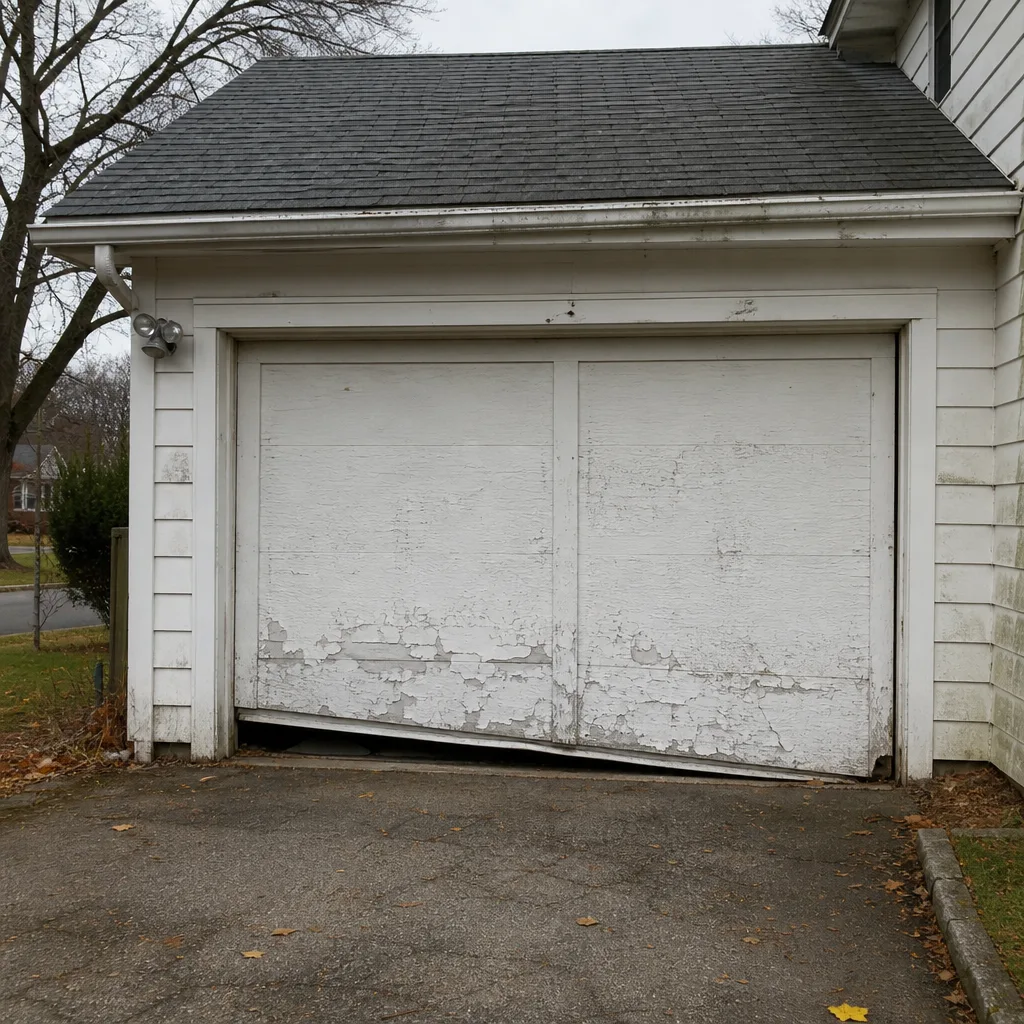 Before
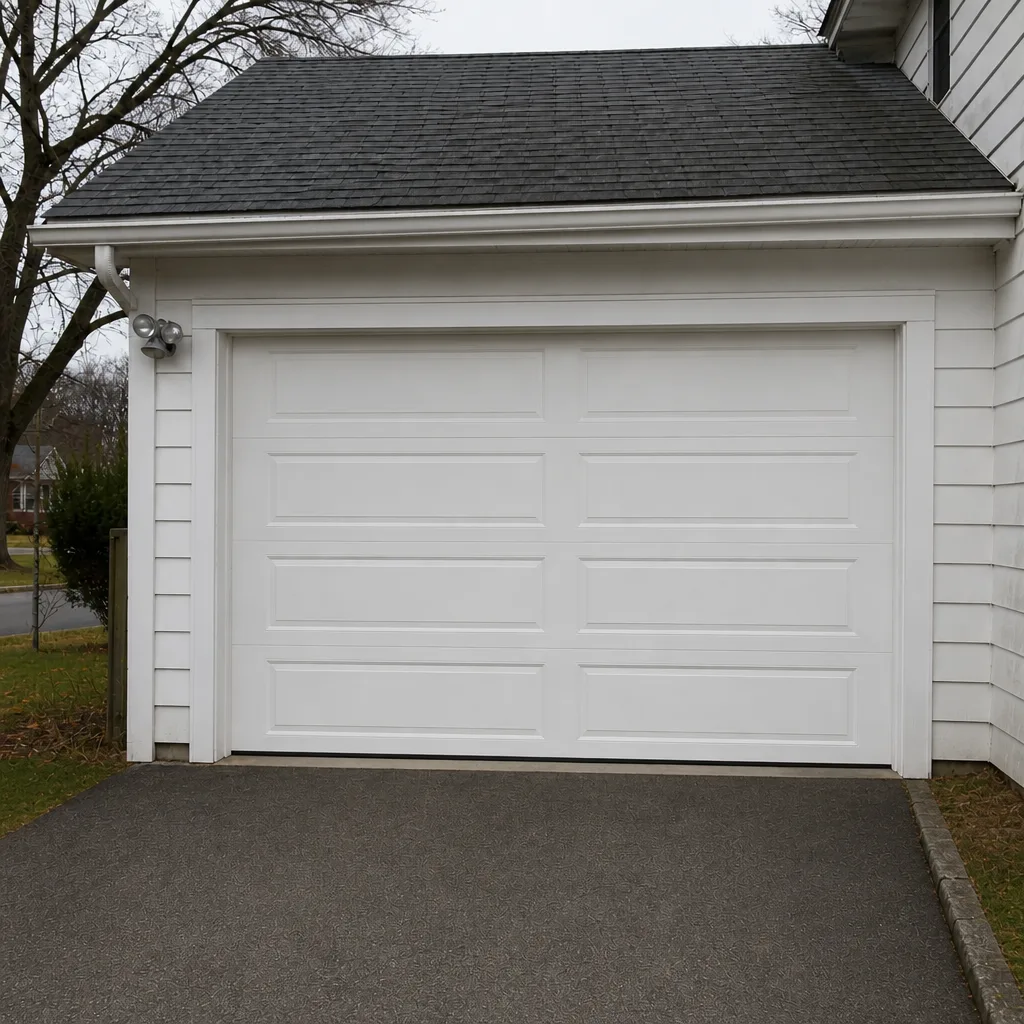 After
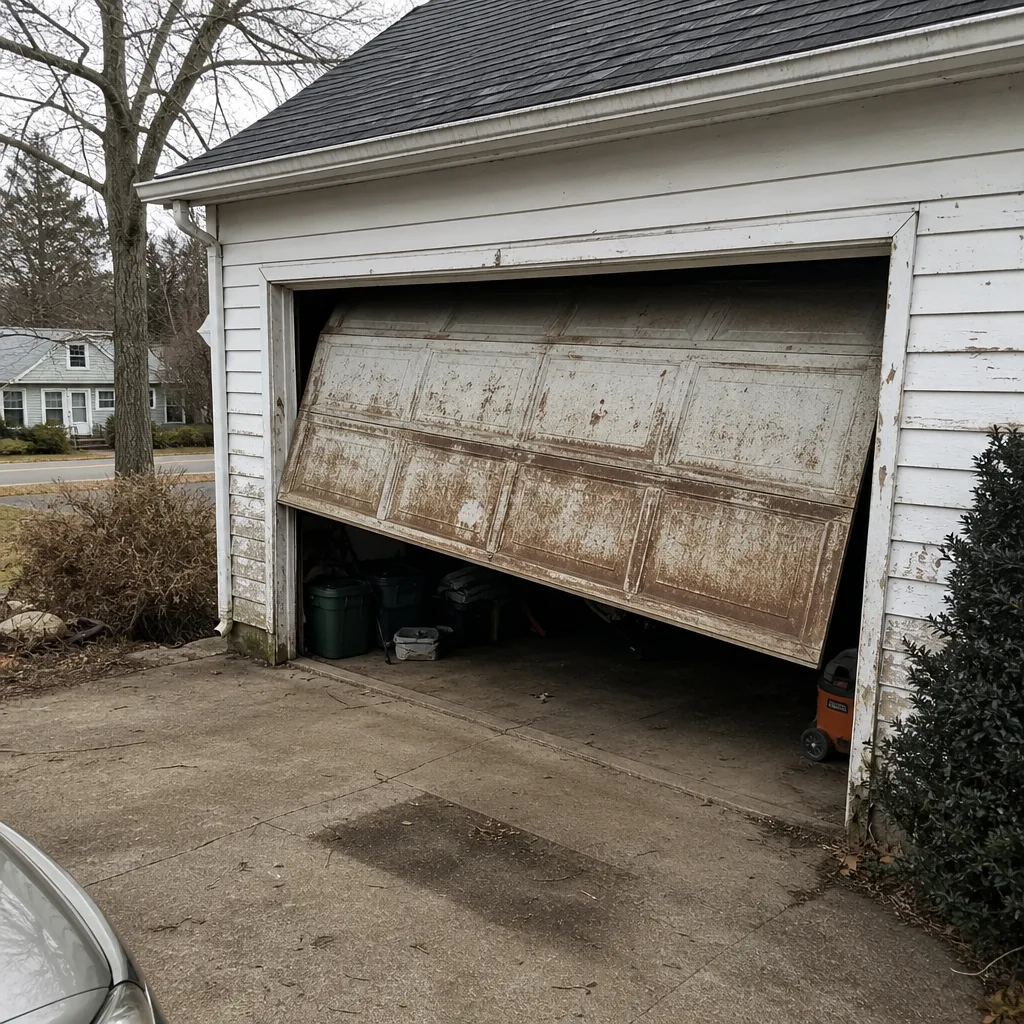 Before
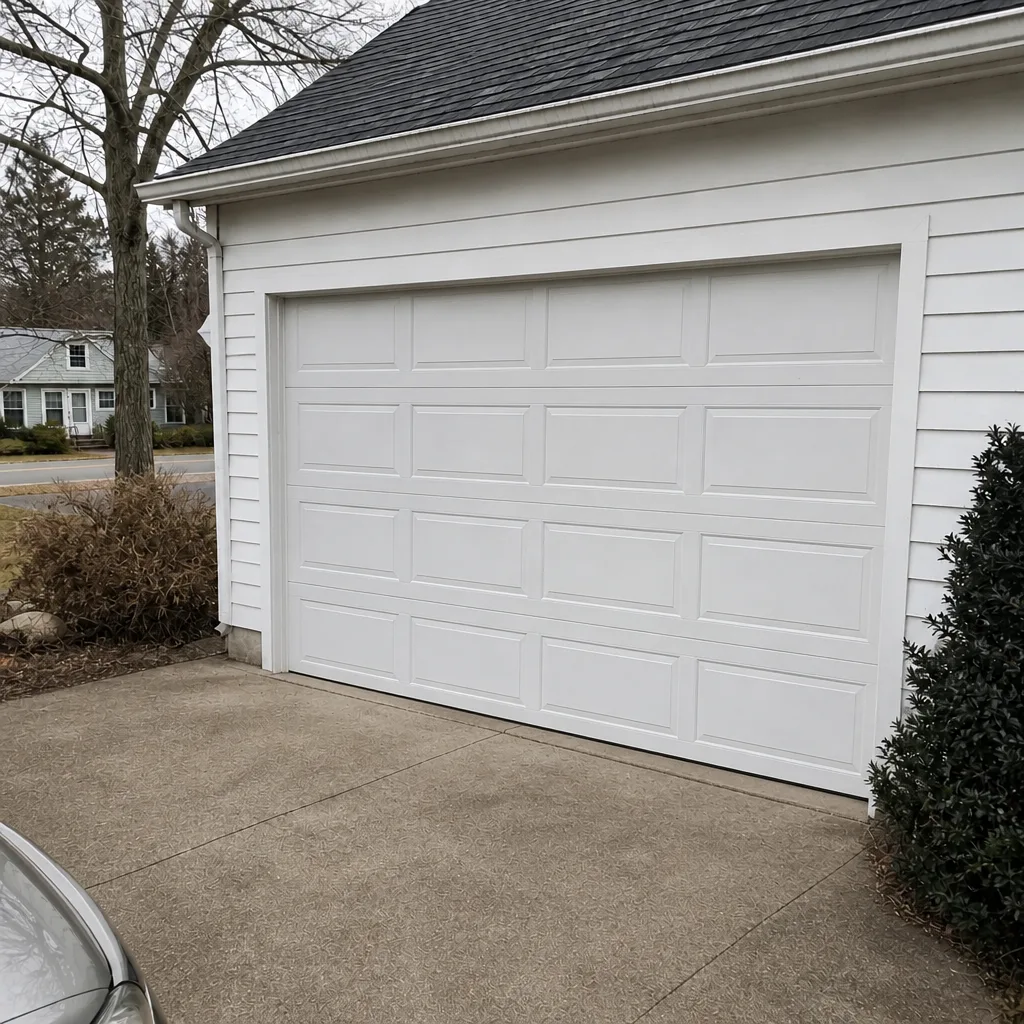 After
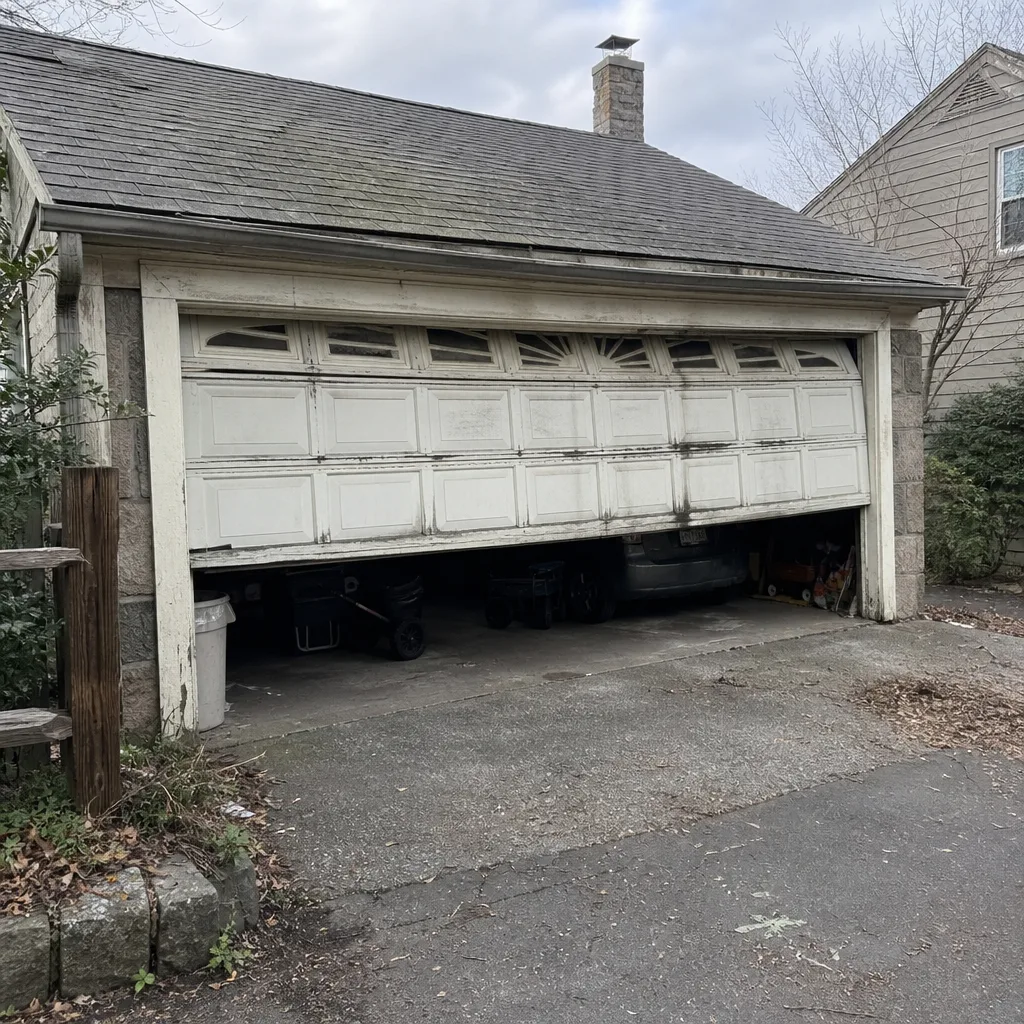 Before
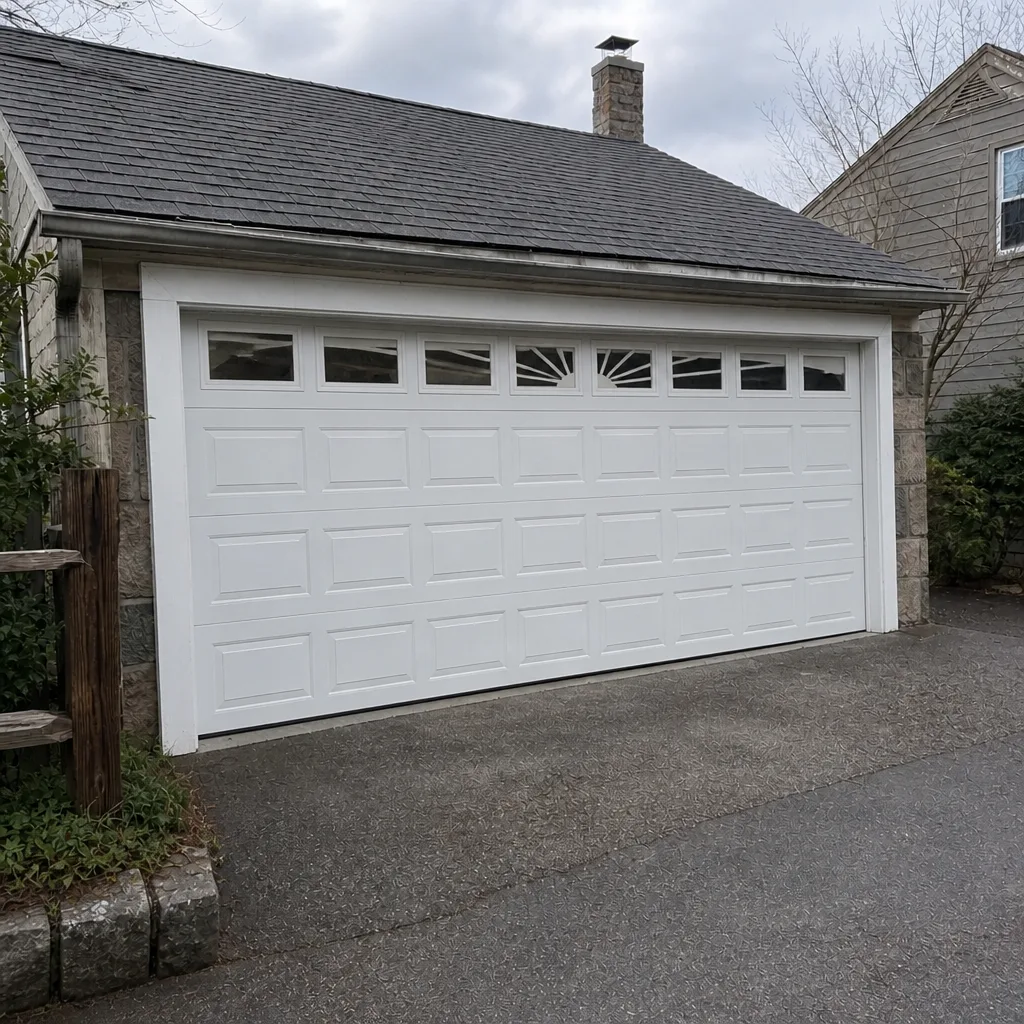 After
When to Call a Professional
Call a professional when the door won’t move, moves unevenly, or makes a noise that wasn’t there before. Call when a spring breaks, a cable frays, a panel is damaged, or the door comes off the track. Call when the opener runs but the door doesn’t, or reverses for no clear reason. Call when the bottom seal is torn or the door no longer closes flush. And call when you’re considering a replacement, because a free measure and a written quote will tell you what’s realistic before you spend anything. Clover Garage Door Service offers free estimates in Stamford, so call (855) 632-3568. We answer 24/7. Fast dispatch from 7am to 7pm, Sunday through Friday.
Frequently Asked Questions
Humidity and repeated freeze-thaw cycles wear springs, cables, and bottom seals faster here than in most inland towns. Moisture works into small gaps, freezes overnight, expands, and widens them a little each time. Annual lubrication and a seasonal swap of worn seals make a real difference.
Most garage door replacements require a permit, and Stamford’s building department applies its own process on top of the Connecticut State Building Code. Call the city’s building department directly before you order a door, and confirm the inspection steps. Any installer should be comfortable with that process.
Yes. We work on the brand you already have, including Raynor, LiftMaster, Chamberlain, and Genie systems. Being brand-agnostic means we diagnose what’s actually failing instead of pushing you toward equipment we prefer to sell.
A mechanical failure on a structurally sound door is almost always worth repairing. A door that’s warping, cracking, or rusted through at the bottom edge is usually a replacement. The decision tree above walks through it step by step, and a technician can confirm in one visit.
First, check the wall switch, the batteries in your remote, and whether the safety reverse is tripped. If the opener still won’t run, or if the door is heavy when you disengage the opener, stop and call. A straining motor usually means the door is out of balance, not that the motor is bad.
Every job is priced per job by a written estimate, and the price is set before any work starts. The estimate is free. Call (855) 632-3568 for an exact quote, and you’ll get a written price before anything begins.
The Bottom Line
Garage doors in Stamford live in harder conditions than most national guides acknowledge. Moisture and freeze-thaw cycle through every moving part, and the housing stock varies enough that Shippan capes, North Stamford colonials, and downtown condo garages each need a different approach. The practical takeaways: inspect twice a year, lubricate properly, watch for rust and worn seals, get a professional for springs and cables, and confirm permit requirements with the city before any replacement. Repair when the door is sound, replace when it isn’t, and upgrade when a specific problem needs solving. Our team at Clover Garage Door Service is here to help with all three, and you can find more about how we work in Stamford. Call (855) 632-3568 for a free estimate. We answer 24/7. Fast dispatch from 7am to 7pm, Sunday through Friday.
Written by the team at Clover Garage Door Service.