
Last updated November 15, 2026
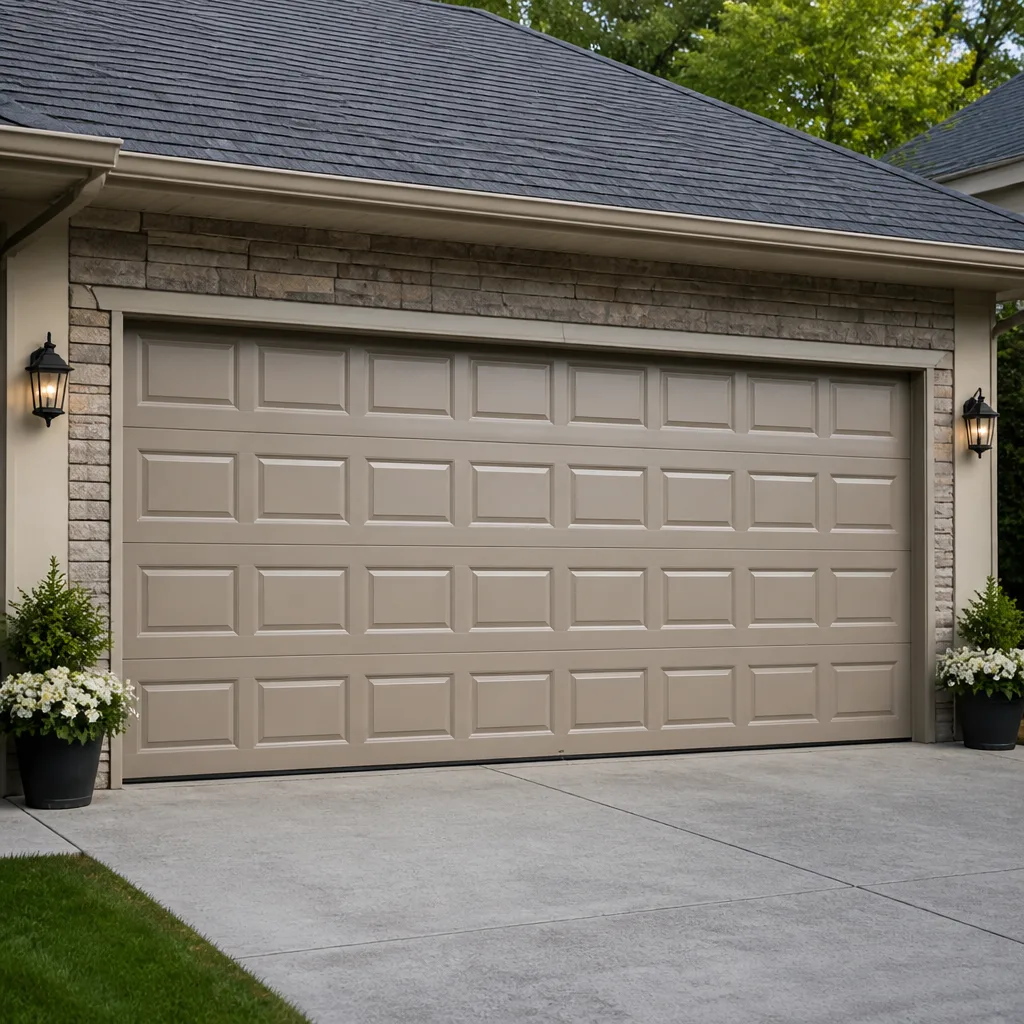 Raised-panel steel
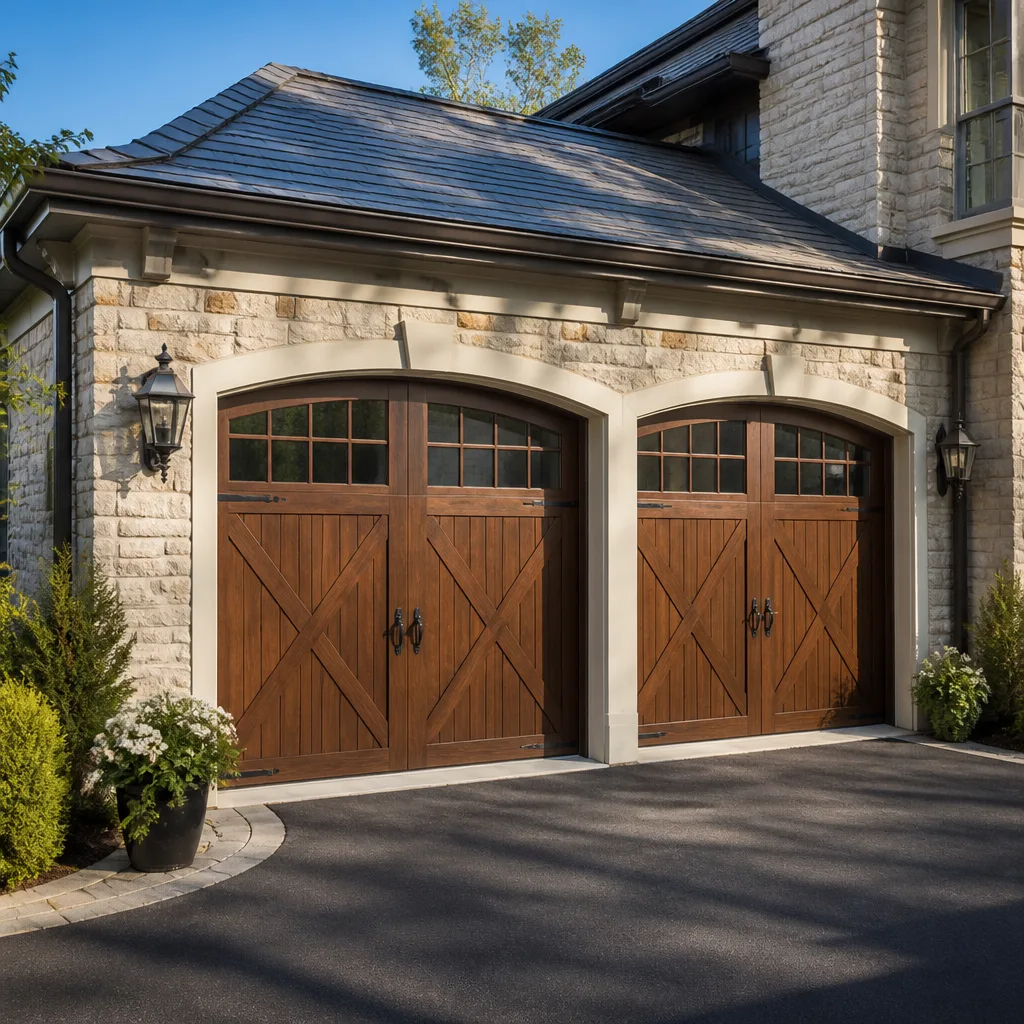 Carriage house
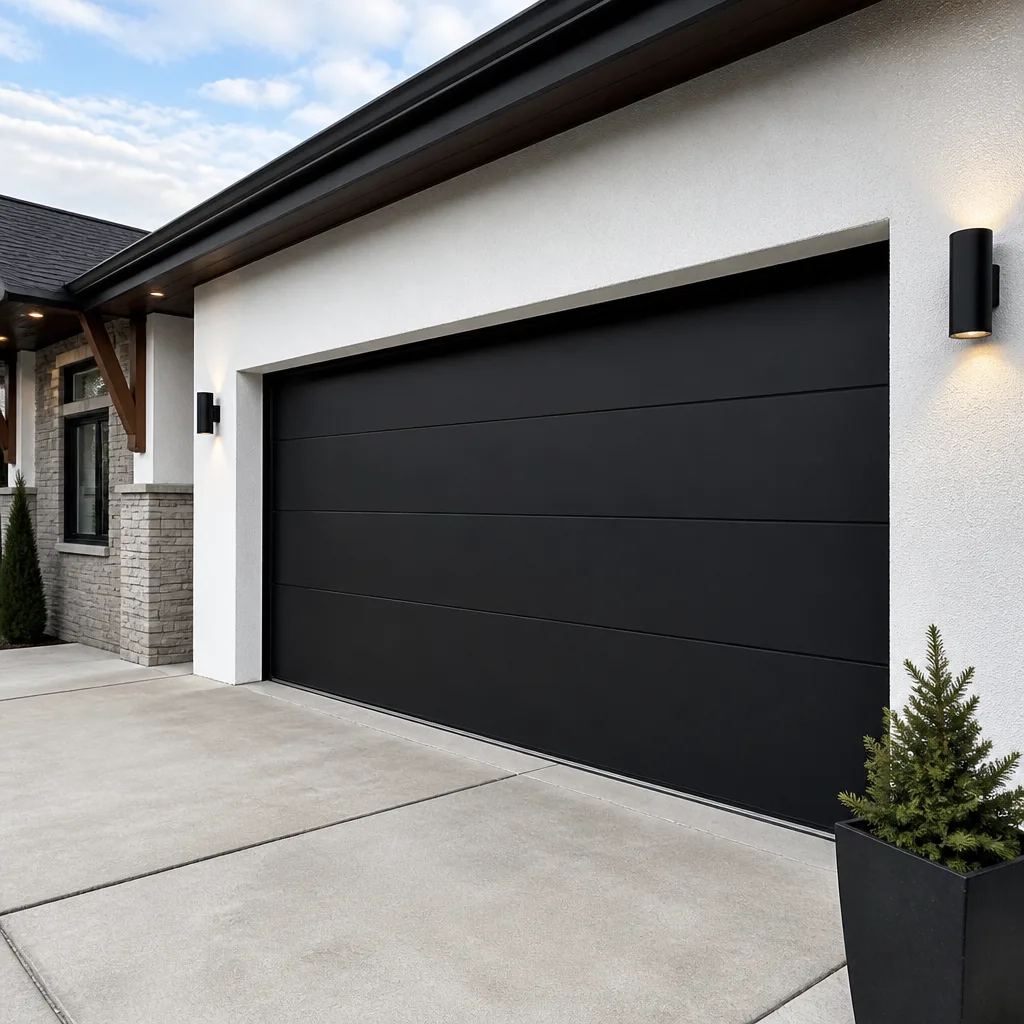 Modern flush
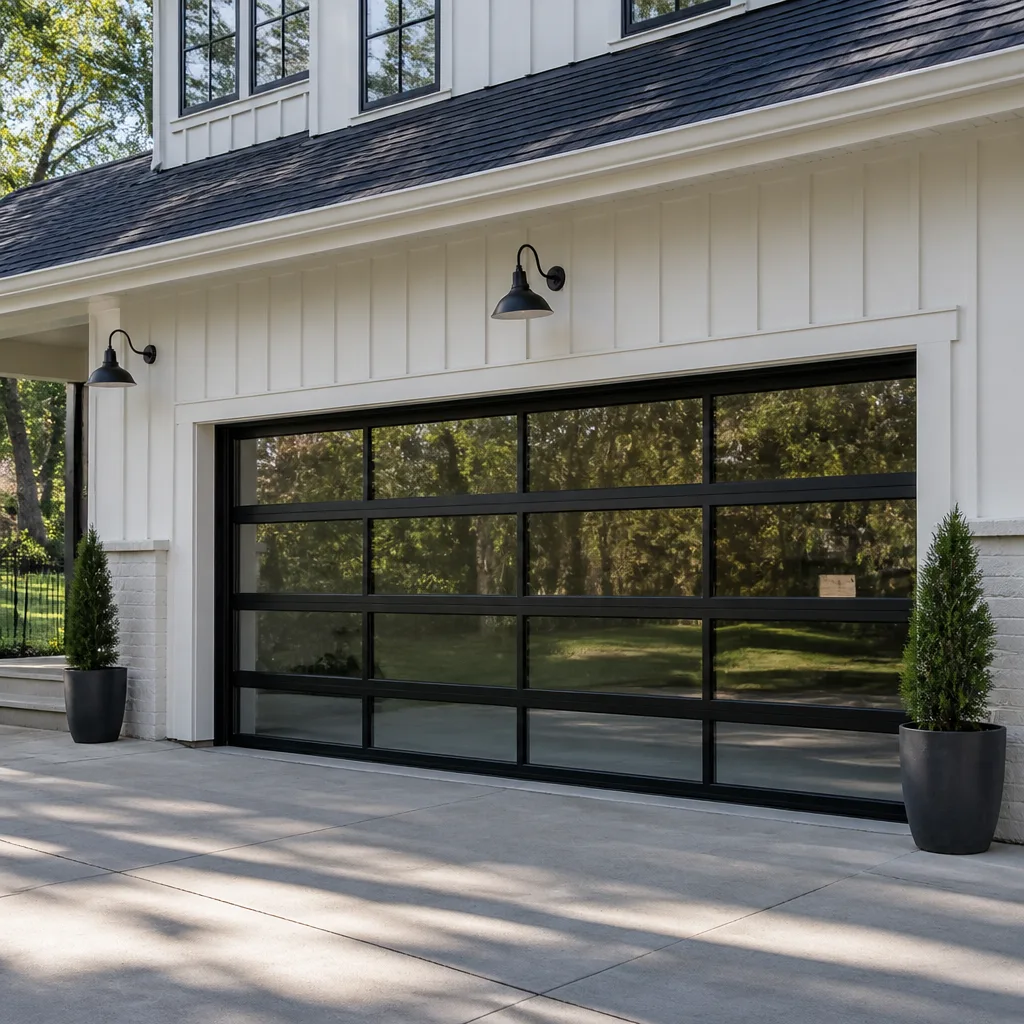 Full-view glass
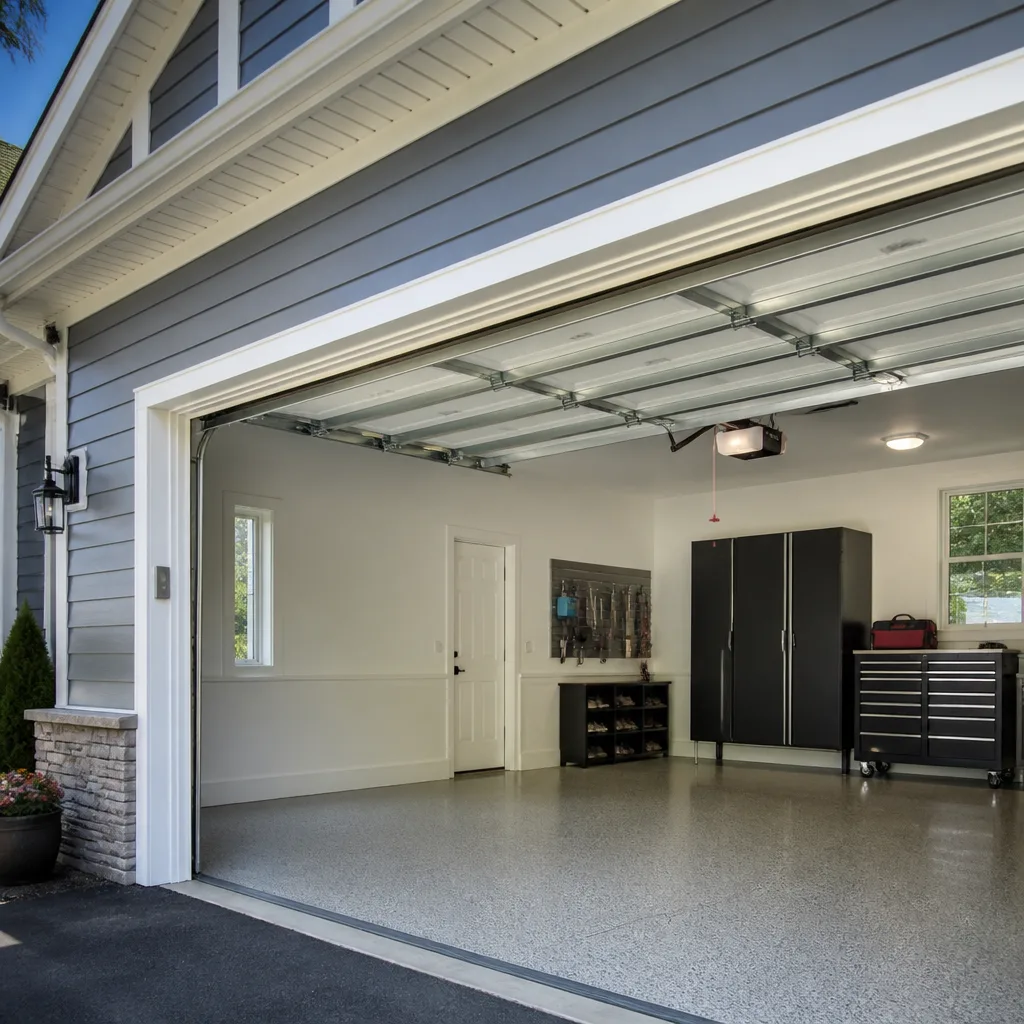 LiftMaster openers
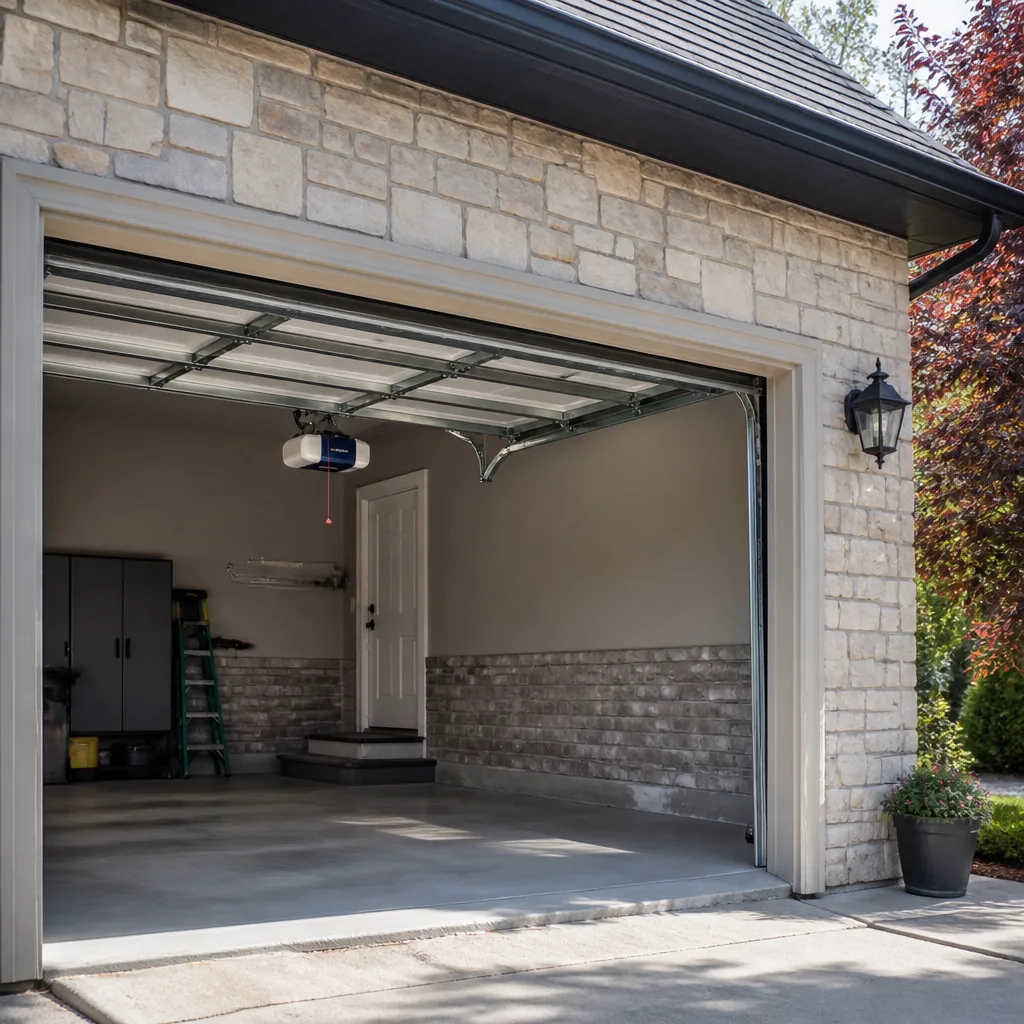 Chamberlain openers
Full 25-point door and opener safety check with every visit - springs, cables, rollers, tracks, and your LiftMaster or Chamberlain opener included
You get a price before we start. It does not change when the pro arrives.
Get your free estimateGarage Door Warning Signs: A Stamford Homeowner’s Reference Guide
A garage door that reverses before it touches the ground isn’t broken. It’s doing exactly what its safety sensors are designed to do. But a door that reverses after it has already met the ground is a different problem entirely, and homeowners confuse the two constantly. One is a feature working correctly. The other is a mechanism telling you something has shifted, worn, or failed. This guide separates the two, connects each warning sign to the cause most likely behind it, and tells you whether you’re looking at a scheduled repair or a stop-using-the-door-right-now situation. We’ll also explain how Stamford’s temperature swings can mimic real failures, which sounds point to springs versus tracks versus the opener, and what you can check yourself each month without a single tool.
Quick Answer
Common garage door warning signs include a door that reverses after touching the ground, grinding or snapping noises, slow or jerky travel, a door that hangs crooked, and visible gaps between the door and the frame. Most of these point to worn springs, misaligned tracks, or opener strain rather than a full door failure. The urgent exceptions are a snapped spring, a door that will not stay up on its own, or any visible frayed cable; those mean stop using the door and call a professional. When in doubt, call (855) 632-3568 for a free estimate.
Styles & brands we work with
- Raised-panel steel
- Carriage house
- Modern flush
- Full-view glass
- LiftMaster openers
- Chamberlain openers
Table of Contents
- Symptom-to-Cause Matrix: What Each Sign Usually Means
- Reading the Sounds: Springs, Tracks, and Opener Strain
- How Stamford Weather Creates False Alarms
- The 30-Day Repair Window vs. Stop Using It Now
- A Monthly Visual Inspection You Can Do Without Tools
- Springs and Cables: Why You Never Touch Them
- Opener Warning Signs Most Homeowners Miss
- Repair or Replace: Reading the Warning Signs Together
Symptom-to-Cause Matrix: What Each Sign Usually Means
Most guides list symptoms one at a time. That’s not how a garage door fails. Symptoms cluster, and reading them together tells you far more than any single complaint. Here’s how we sort them, ranked from cosmetic to urgent.
| Warning Sign | Most Likely Cause | Urgency |
|---|---|---|
| Minor scuffs and faded paint | Normal aging, weather exposure | Cosmetic – schedule whenever |
| Squeaking during travel | Dry rollers and hinges | Low – lubrication usually solves it |
| Door reverses before touching the floor | Safety sensor doing its job | None – this is designed behavior |
| Door reverses after touching the floor | Misadjusted travel limits or sensor alignment | Medium – book a repair visit |
| Door drifts down a few inches after opening | Spring tension loss | Medium – 30-day window |
| Grinding or scraping metal on metal | Track misalignment or worn rollers | Medium to high – gets worse fast |
| Door hangs visibly crooked | Broken spring or stretched cable | High – stop using |
| Loud snap followed by door not lifting | Snapped torsion or extension spring | Urgent – stop using immediately |
| Frayed or kinked cable | Cable wear | Urgent – stop using immediately |
The pattern matters more than any row. A door that squeaks and travels evenly is in a completely different category from a door that squeaks, hangs slightly uneven, and hesitates halfway up. The first is maintenance. The second is a spring losing tension, and it will not fix itself. In our experience across Stamford, homeowners often wait on the second category because the door still technically opens. That’s the trap.
One thing to be clear about. “Cosmetic” doesn’t mean ignore it. Rust spots on a steel Clopay panel spread faster when moisture sits in them, and while that’s not a safety issue, a patch that starts small is far cheaper than a panel that needs replacing. For the mechanical symptoms, a proper garage door repair visit is the honest way to sort real failure from normal wear.
Reading the Sounds: Springs, Tracks, and Opener Strain
You don’t need a stethoscope to diagnose a garage door. The sounds it makes fall into a few recognizable families, and each family points somewhere different. Here’s how to listen.
The sound of spring wear
A healthy spring is nearly silent under load. What you’ll hear when it’s wearing out is a ping or a twang at the start of travel, a hesitation, and a change in the door’s balance. Torsion springs, common on newer Stamford homes, wind around a bar above the door and lose tension gradually. Extension springs, common on older doors, stretch alongside the tracks and can develop a visible gap in the coils. A loud, sudden snap is a spring that has failed entirely. When you hear that snap, the door is no longer counterbalanced, and it can drop without warning. Stop using it.
The sound of track misalignment
Track problems sound metallic and grindy, not springy. If you hear scraping as a specific roller passes a specific section, that’s a track that’s bent or out of alignment at that point. Rollers riding against the edge of a warped track wear flat spots on one side, and the door starts to lurch. Misalignment usually shows up after a bump, a settling foundation, or a door that has been forced when something was in the way.
The sound of opener motor strain
Opener strain is a lower, labored hum. You’ll hear the motor working harder and the door moving slower, or the motor running while the door barely budges. On a LiftMaster or Chamberlain unit, that usually means the opener is fighting extra weight from a weakening spring, not that the opener itself is dying. Replacing the opener when the real problem is the spring is one of the most common diagnostic errors we see. A Genie or Craftsman opener that suddenly sounds tired after years of quiet operation is telling you the door got heavier, not that the motor aged overnight.
A quick listening checklist
- Stand outside the door and listen to a full open and close cycle.
- Note the timing of the noise: at start, mid-travel, or at the floor.
- Spring noises come at the start and pair with balance changes.
- Track noises are tied to a travel position and repeat each cycle.
- Opener strain is continuous through the whole cycle.
If the sound is new, note it, and if it comes with a crooked door or a dead stop, treat it as urgent. If the sound is a light squeak and the door travels evenly, a professional lubrication during a scheduled visit is enough.
How Stamford Weather Creates False Alarms
Stamford sits in a climate with real seasonal swings. Cold winters, warm summers, and wide temperature changes within a single day are all normal here. That pattern produces two specific false-alarm symptoms homeowners call about every year.
Slow operation in winter cold
Garage door grease thickens in the cold. Metal contracts slightly. Springs lose a bit of their tension as the temperature drops. The result is a door that runs a little slower and sounds a little heavier on a cold morning than it did in September. That’s temperature, not failure. If the door still opens fully, travels evenly, and stops where it should, the sluggishness is seasonal. What’s not seasonal is a door that needs a second press to close, or that reverses after touching the floor. Those point to a spring or an opener limit adjustment, not the weather.
Photo eye interference in direct summer sun
The safety sensors at the base of the door use a light beam. When summer sun hits one sensor directly, the beam can scatter and the door refuses to close, or closes partway and reverses. That’s a sensor doing its job against confusing light. If the door works in the morning and fails only in the afternoon when the sun lines up, you’re looking at sun interference. A quick reposition of the sensor angle or a small sun shield solves it. If the sensor refuses to close the door at any time of day, that’s a real alignment or wiring problem, not weather.
Other Stamford-specific things to know
- Right after a heavy snowstorm in neighborhoods like North Stamford or Glenbrook, a door can refuse to close because something shifted against the frame. That’s the door protecting itself, not a broken opener.
- Spring thunderstorms and the moisture they leave behind speed up rust on steel components. A light coat of proper lubricant after a wet stretch is worth doing.
- Freeze-thaw cycles in early spring are the hardest season on hardware. Bolts loosen and tracks shift. That’s when most misalignment calls come in.
If a symptom only shows up in specific weather and goes away when the weather changes, it’s worth a service visit but not an emergency call. If it persists in mild weather, treat it as mechanical. When you’re ready to sort it out, the team behind Clover Garage Door Service handles the diagnosis in one visit.
The 30-Day Repair Window vs. Stop Using It Now
Every warning sign fits into one of two buckets. Either it has a roughly 30-day repair window before it escalates, or the door shouldn’t be used until it’s been looked at. Getting this wrong is the main reason small repairs turn into big ones.
The 30-day window signs
- A slight hesitation at the start of travel
- An occasional squeak or squeal through the cycle
- A door that drifts down a couple of inches after opening
- Clearance or alignment that’s off by a small amount
- A sensor that needs a nudge occasionally
- A remote or wall button that sometimes fails to respond
These signs have real causes, but the door is still safe to use in normal cycles. Booking a repair visit within a month keeps the cost near its lowest and gives a technician time to handle the cause while the door still works. Waiting past that window usually means the same fix plus a second symptom.
The stop-using-it-now signs
- Any visible snap or loud pop, followed by the door not lifting
- A door that hangs crooked or doesn’t stay open on its own
- A frayed, kinked, or hanging cable
- The door falls fast or drops when the opener releases
- A gap at the frame that wasn’t there before a storm
- The opener runs but the door doesn’t move
These point to a failed spring or a damaged cable, and the door loses its safe counterbalance. If you hear a snapping sound from the ceiling above the door or from the bars along the tracks, stop using the door. Don’t pull the manual release to try it. Don’t force it by hand. Don’t click the opener again to test it. Call for a professional visit and leave the door closed. Our team handles these as a priority when you call (855) 632-3568.
A Monthly Visual Inspection You Can Do Without Tools
You can catch most of these warning signs early with a two-minute check once a month. Keep your hands out of the door’s path and keep your feet clear of the closing edge. No tools needed.
- Look at the door from across the driveway. Stand back and check whether the panels line up straight across. A door that’s visibly crooked at rest is telling you a spring has failed or a cable has slipped.
- Run the door and listen. One full cycle, no interruptions. Note any new sound, and where in the travel it happens.
- Check the safety reverse. Place a piece of cardboard under the closing edge and press close. A door that reverses before touching the cardboard is working correctly. A door that presses down before reversing needs adjustment.
- Look at the tracks. From the side, the tracks should be straight and parallel. Any obvious bend, dent, or shininess on one edge means a roller is grinding.
- Glance at the springs and cables. Look but don’t touch. A visible gap in a spring coil, a frayed cable, or a loose end is an urgent sign.
- Check the sensors. Look at the two sensors at the base of the door. A small LED on each one is normal. A flickering or dark LED suggests a wiring or alignment issue.
- Test the balance. With the door closed, pull the manual release and lift the door about halfway by hand. If it stays there, the springs are balanced. If it drops or is hard to lift, spring tension is off. Reconnect only after the door is closed.
If any of these checks reveal a problem, you’ve caught it early. If all seven pass, your door is fine this month. One note on that last step: if you have an older door and aren’t comfortable with the manual release, skip it and let a technician handle the balance check during the next visit. The rest of the inspection tells you plenty on its own.
Springs and Cables: Why You Never Touch Them
Garage door springs and cables are under high tension even when the door is at rest. A torsion spring stores enough energy to open the door on its own, and that energy has to go somewhere when a spring fails or a cable slips. Fingers and hands are not built to catch it.
This is not a case where a patient homeowner can figure it out. Springs and cables are the one part of a garage door system where the honest answer is always to call a professional. Winding a torsion spring takes specific tools and specific knowledge of the correct number of turns based on the door’s weight and size, and getting it wrong can send hardware flying. Extension springs are equally dangerous because they carry stretch force along the length of the track.
What you can safely do: look, listen, and stop using the door when something looks wrong.
- Look at the spring coils for a visible gap. A gap means failure.
- Look at the cables for fraying, kinks, or slack. Any of those mean stop using.
- Listen for a snap, twang, or pop from above or beside the door.
- Note any change in door balance. That means a spring or cable issue is in progress.
For a full explanation of what a proper repair involves, see our guide to garage door repair in Stamford. For the safety checks you should do yourself, the monthly inspection above will catch most problems without your hands near the tension parts.
Opener Warning Signs Most Homeowners Miss
The opener is the electronic half of the system, and its failure patterns are different from the door’s. A homeowner who watches the door closely will often miss an opener that’s been struggling for months.
Signs your opener needs attention
- The wall button works but the remote doesn’t, or the reverse
- The opener lights flicker when the motor runs
- The motor runs but the door doesn’t move
- The door reverses without touching the floor
- A single press fails and a second press closes it
- The opener beeps or flashes a code you don’t recognize
- Loud grinding from the opener head, not the door
Flickering lights often mean the outlet the opener is plugged into isn’t grounded properly, or that the outlet is shared with something drawing a lot of power. Motors on LiftMaster and Chamberlain units can also produce a hum and no movement when the internal travel limits have lost calibration. A brand-specific symptom like that is exactly why our technicians work on the same units homeowners already own rather than pushing a single brand. If your opener is a Genie or a Craftsman, we know those systems too, so the diagnosis matches what’s actually in your garage.
What to try before you call
- Press the wall button and the remote separately, to see if the problem is one or both.
- Check the battery in the remote. Simple, and it saves a callout.
- Look at the opener’s LED. A few flashes followed by a pause is a code, and the manual that came with the unit explains it.
- Test in the morning, in the afternoon, and in the evening. If the problem is time-of-day-specific, it points to sunlight or electrical load rather than the opener itself.
If the door still won’t move reliably after those four checks, the opener needs a professional look. Our garage door opener repair work covers LiftMaster, Chamberlain, Genie, Craftsman, and the rest of the major brands without any pressure to swap brands.
Repair or Replace: Reading the Warning Signs Together
No single warning sign answers the repair-or-replace question. The combination does. A door that has one worn spring and otherwise runs evenly is a repair. A door that has a spring problem, a bent track section, a fading opener, and visible panel wear is a replacement conversation. Here’s how the signs stack up.
- One symptom, mechanical cause: Almost always a repair. Single-issue fixes are straightforward.
- Springs plus a bent track: Still likely a repair. Both are serviceable parts and a technician handles them together.
- Three or more symptoms on a door over 15 years old: Worth pricing a new installation against the repair. The math shifts.
- Opener failures on a unit that has needed two or three service visits: Time to consider a replacement opener on the door you already have.
- Panels with structural dents or rot: Replacement is usually the better path than patching.
For homeowners in Stamford facing that decision, the useful thing is to get both prices before choosing. We quote repairs and installations from the same visit, so you don’t have to call two companies and can’t be upsold from one to the other. Our Stamford service covers the whole range from a snapped spring to a full new installation, which means the recommendation is based on what your door actually needs, not on what’s easier to sell. A door that has served you well and has one mechanical problem is a repair, every time.
Common Mistakes to Avoid
- Confusing “reverses before the floor” with “reverses after the floor.” The first is a sensor working as designed. The second is a limit or sensor alignment problem. The two get treated as the same complaint constantly, and it’s the single biggest source of unnecessary worry we see.
- Replacing the opener when the springs are shot. A new LiftMaster or Chamberlain opener on a door with a weakening spring will sound just as labored as the old one. Springs first, opener second.
- Forcing a crooked door up with the opener. A door that’s crooked means a broken spring or a slipped cable. Forcing it stresses the panels, the tracks, and the opener motor all at once. Stop using it and call.
- Lubricating the tracks themselves. Rollers and hinges take lubricant; the tracks don’t. Grease on a track collects grit and makes the door louder. Keep the tracks clean and dry.
- Assuming a slow door in January is a problem. Cold thickens grease and tightens metal. A slightly slower door on a 15-degree Stamford morning is normal if it still travels evenly and stops where it should.
- Touching a spring or a cable to “see if it’s tight.” Both are under high tension. Looking is safe. Poking, pulling, or trying to reposition is not.
- Waiting past the 30-day window on a mid-level symptom. A hesitation that gets booked this month is usually one repair. The same hesitation at month three is often two.
See the difference
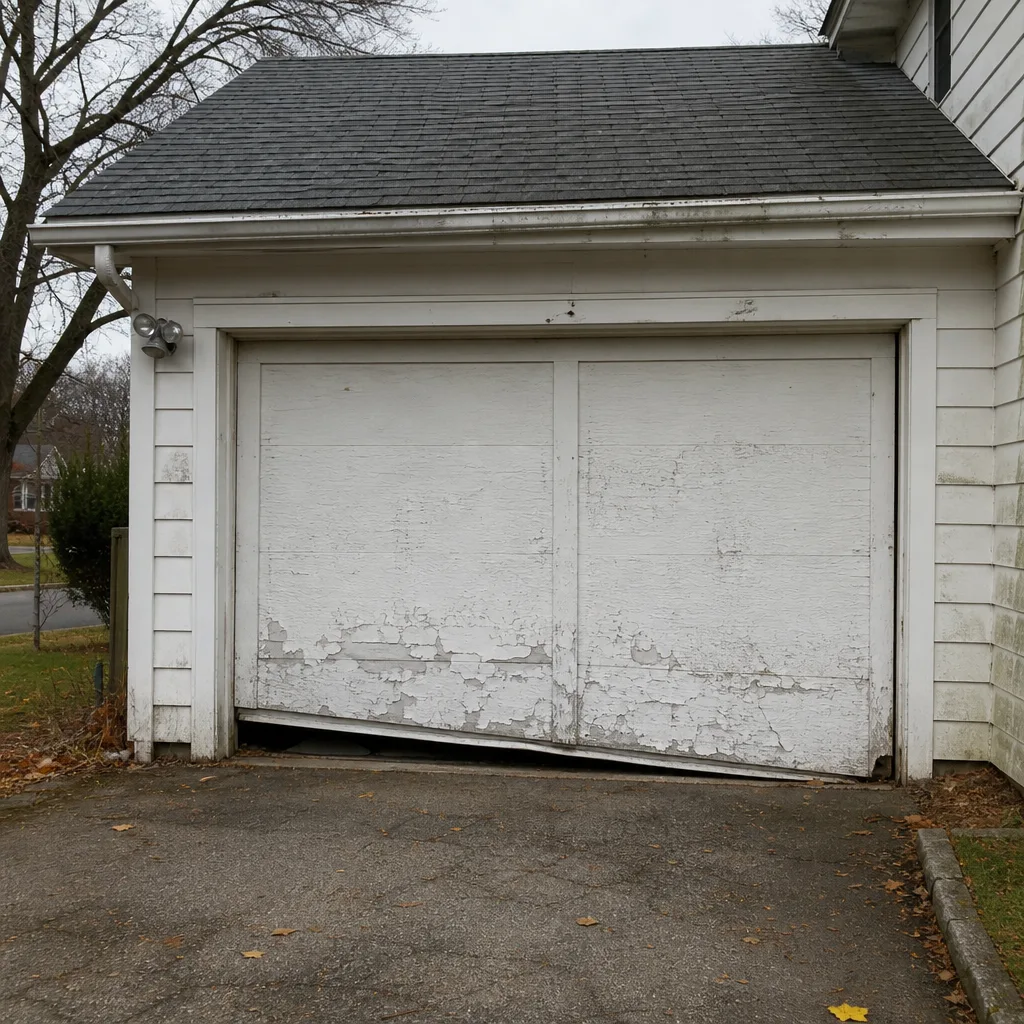 Before
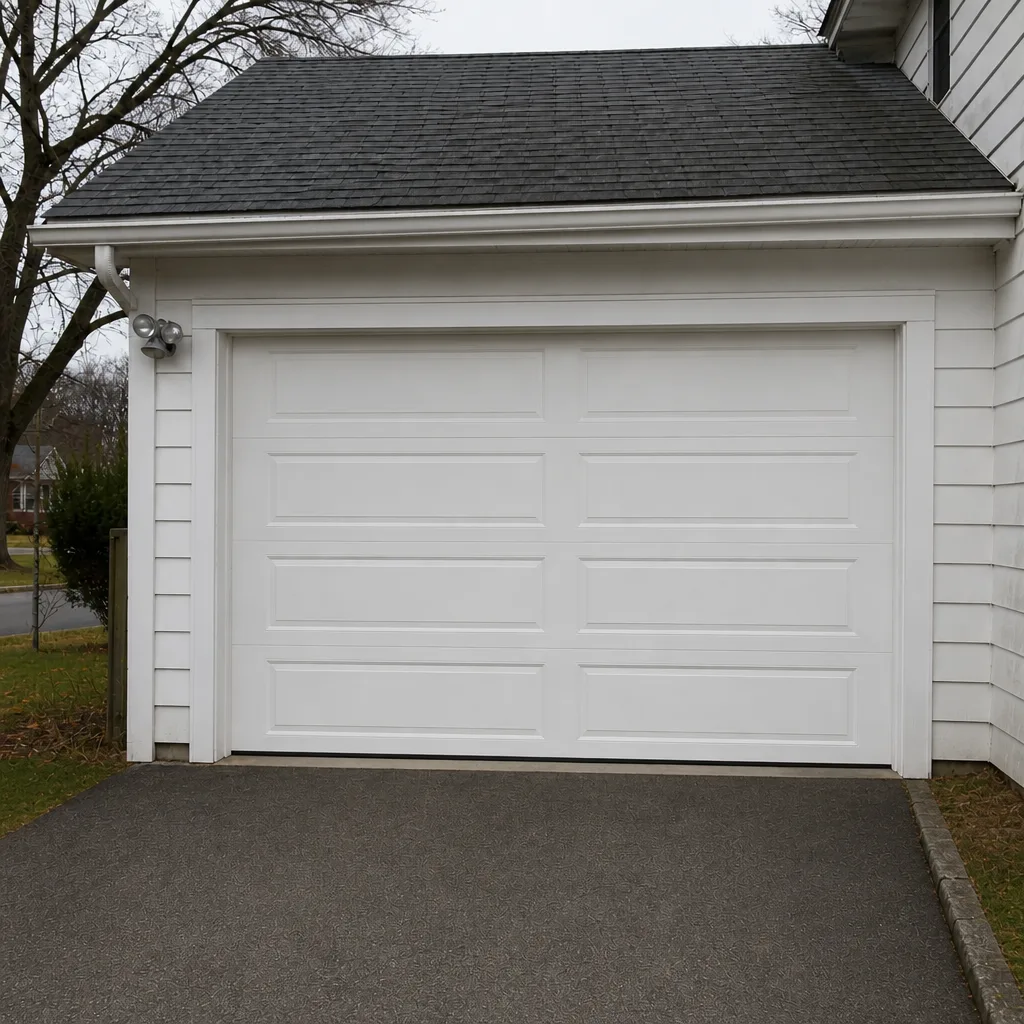 After
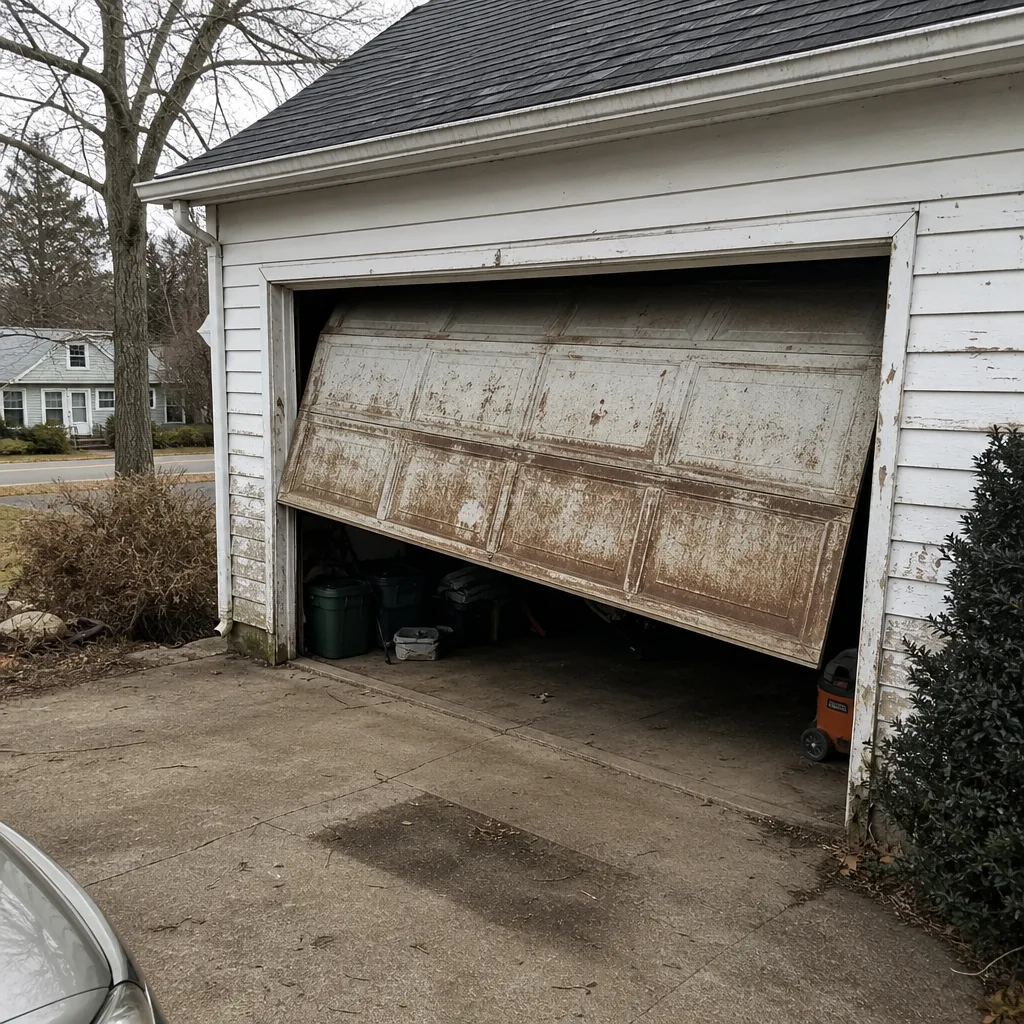 Before
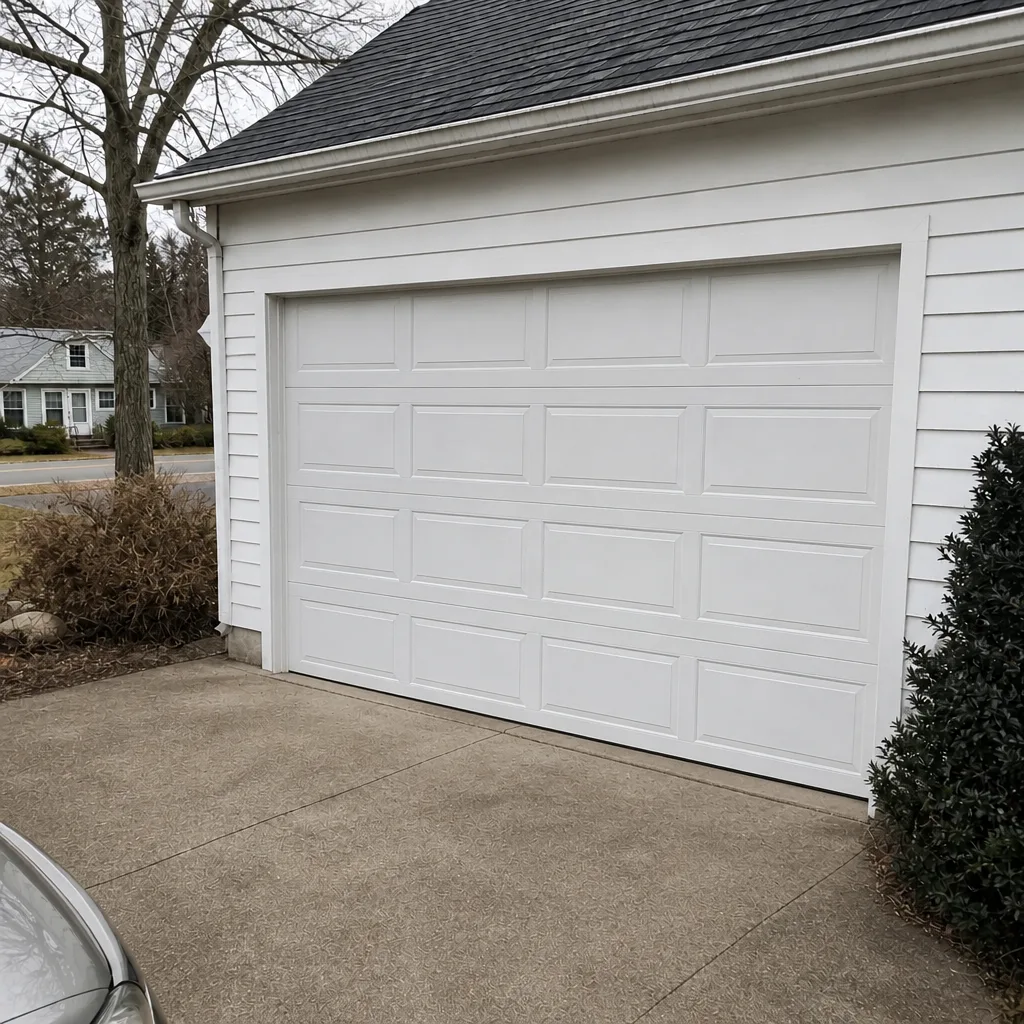 After
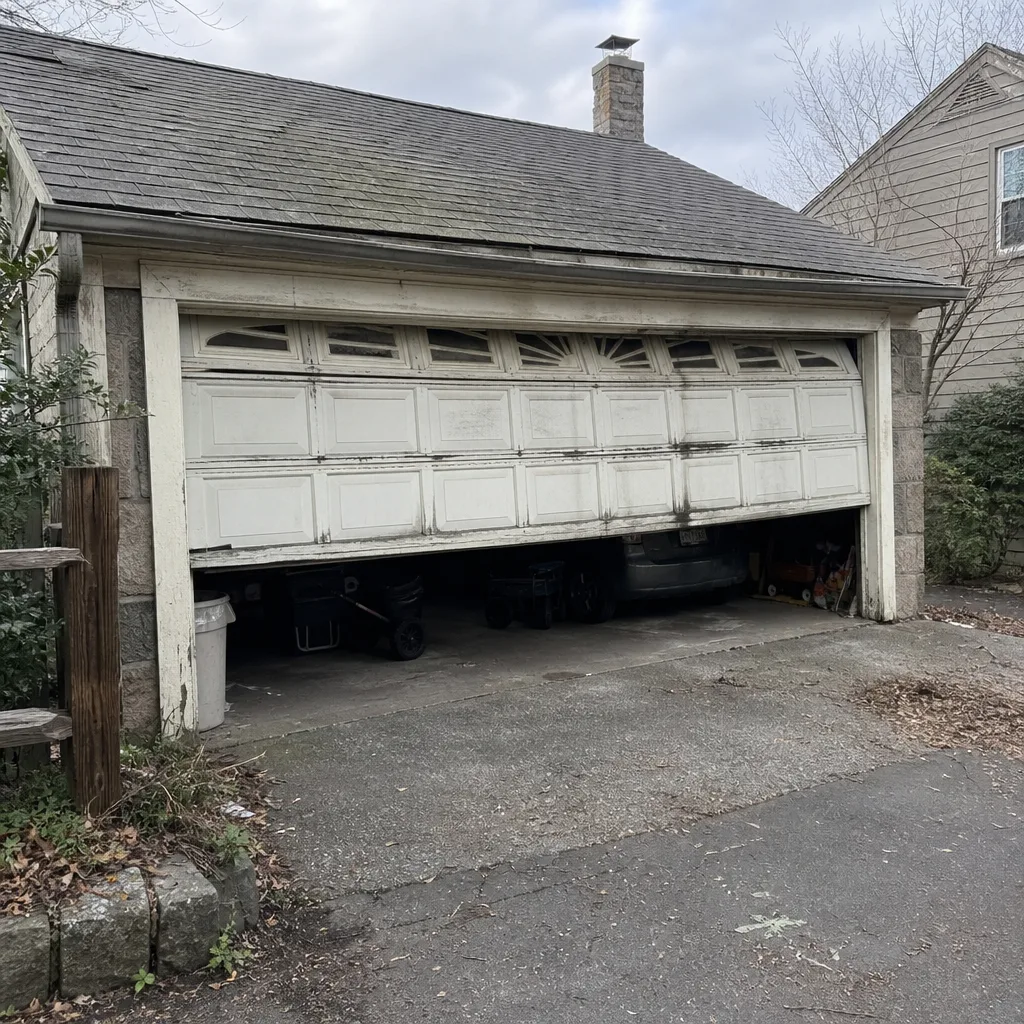 Before
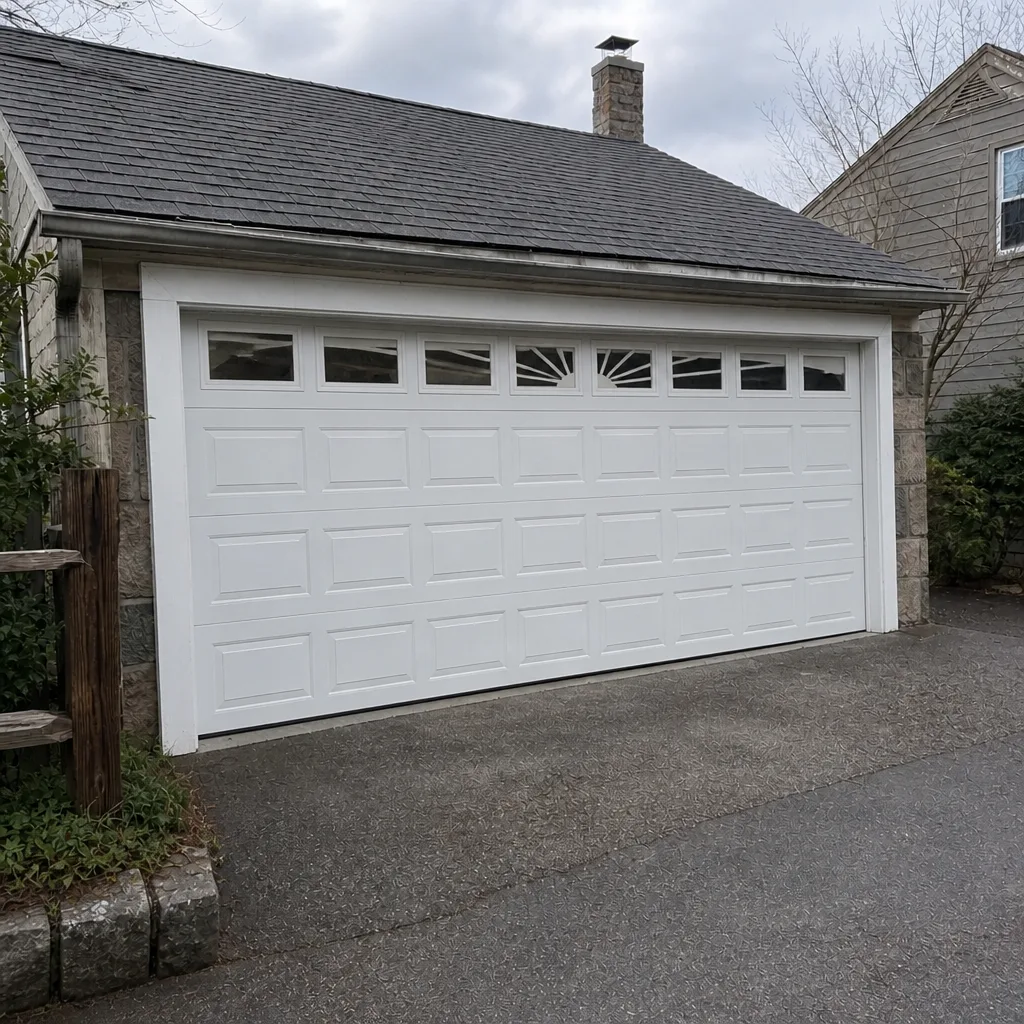 After
When to Call a Professional
Call a professional the moment you hear a snap, see a crooked door, spot a frayed cable, or find that the door won’t stay open on its own. Those four signs mean the door has lost safe counterbalance and shouldn’t be operated. Also call for persistent symptoms that haven’t cleared in mild weather, for an opener that runs without moving the door, for any grinding that’s tied to a specific point in the travel, and for a balance check you aren’t comfortable doing yourself. If the symptom is cosmetic or a light squeak, a scheduled visit is fine and cheaper in the long run than waiting.
Clover Garage Door Service offers free estimates in Stamford. Call (855) 632-3568. We answer 24/7. Fast dispatch from 7am to 7pm, Sunday through Friday. Every price is quoted and agreed before any work starts, so the written estimate sets the final price. Our technicians have up to 8 years of experience and work only on garage doors, across the eight major brands homeowners already own.
Frequently Asked Questions
Garage door repair in Stamford typically ranges from about $150 to $450 depending on the part and the cause. A single spring replacement usually runs $180-$340, and a matched pair is normally replaced together, so a pair costs about twice a single spring. Opener repairs and track adjustments fall in the lower part of that range. These are estimates only, and the written estimate sets the final price. Call (855) 632-3568 for an exact quote; estimates are free.
No, it usually isn’t urgent, but it does need a professional visit within the month. That pattern points to misadjusted travel limits or sensor alignment, not a failed spring. The door can still be operated with care in the meantime. If it reverses before touching the floor, that’s the safety sensor working correctly and nothing to fix. Call (855) 632-3568 to book an appointment.
Often yes, for spring, cable, and opener issues, since those are the parts that most commonly fail and are the focus of a repair visit. Installation and full replacement work is measured and scheduled, not same-day. Call (855) 632-3568 to find out what works for your door. We answer 24/7, with fast dispatch from 7am to 7pm, Sunday through Friday.
No. The price is quoted and agreed before any work starts, so the written estimate is the price you pay. The estimate visit costs nothing. Call (855) 632-3568 for a free estimate.
Yes. Our technicians are licensed and insured, and they work only on garage doors, not on a rotating list of home services. That single-trade focus is part of why we can diagnose across the eight major brands including LiftMaster, Chamberlain, Genie, and Clopay. Call (855) 632-3568 for a free estimate.
Cold weather thickens the lubricant on the rollers and hinges and tightens the metal tracks slightly, which is why a garage door in Stamford runs slower in January than in June. That’s normal if the door still travels evenly and stops where it should. If it hesitates, reverses after touching the floor, or needs a second press to close, that’s a mechanical issue, not the cold. Call (855) 632-3568 to have it checked.
The Bottom Line
Warning signs on a garage door aren’t all created equal. A door that reverses before the floor is working correctly. A door that reverses after the floor needs a scheduled repair. A door that hangs crooked or drops on its own is unsafe and should be left closed until a technician has looked at it. Squeaks and slow travel in cold Stamford weather are usually nothing. A snap, a frayed cable, or any loss of balance is urgent. Check your door once a month with the seven-step inspection, sort any symptom into the 30-day window or the stop-using-it bucket, and don’t touch the springs or cables yourself. One visit, one clear diagnosis, a price you agreed to first.
Call (855) 632-3568 for a free estimate. We answer 24/7. Fast dispatch from 7am to 7pm, Sunday through Friday.
Written by the team at Clover Garage Door Service.