
Last updated November 15, 2026
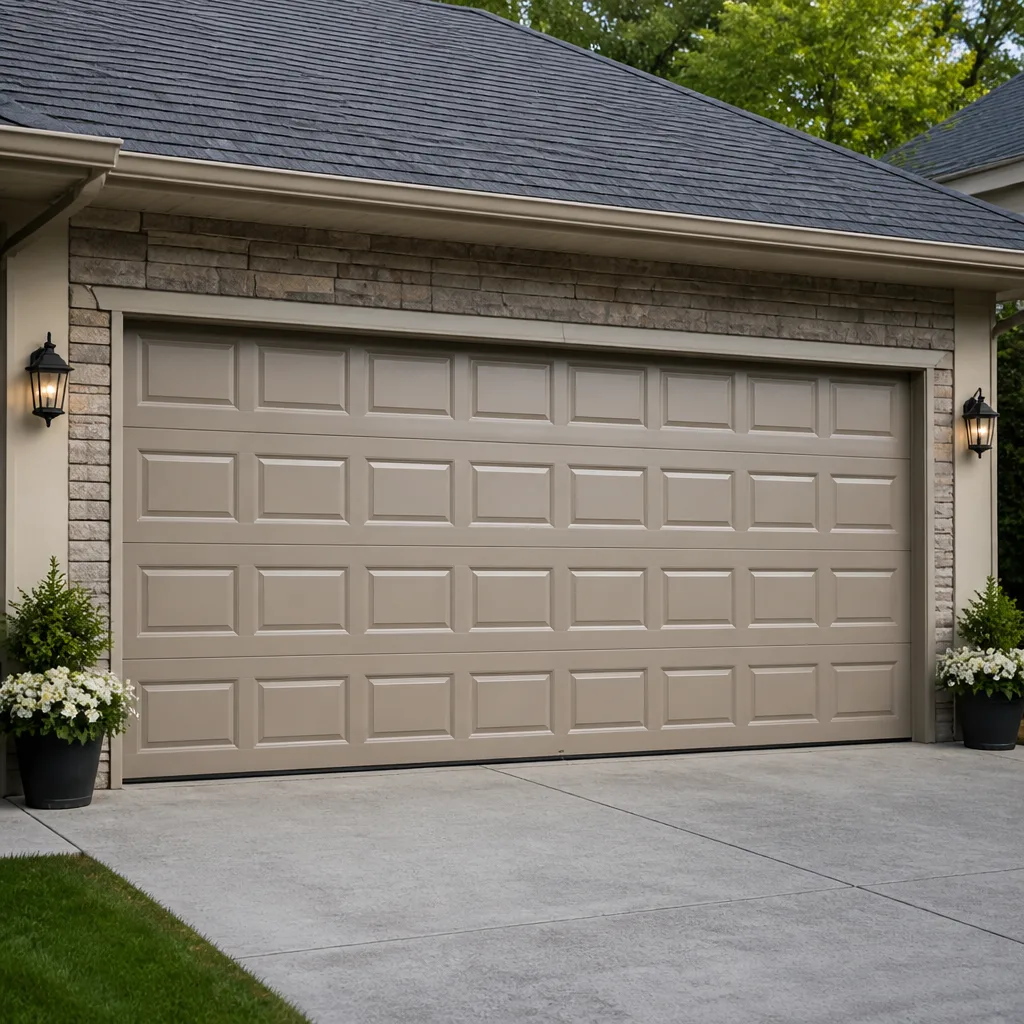 Raised-panel steel
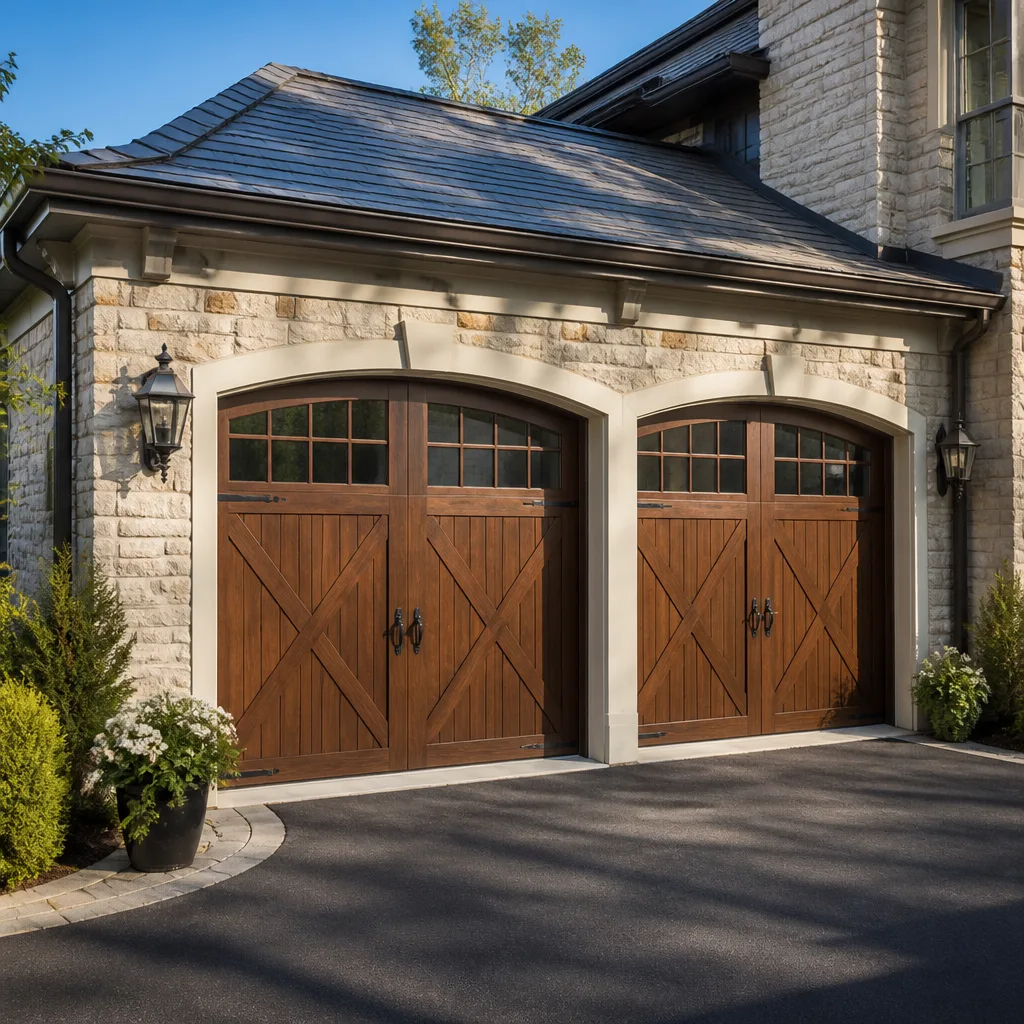 Carriage house
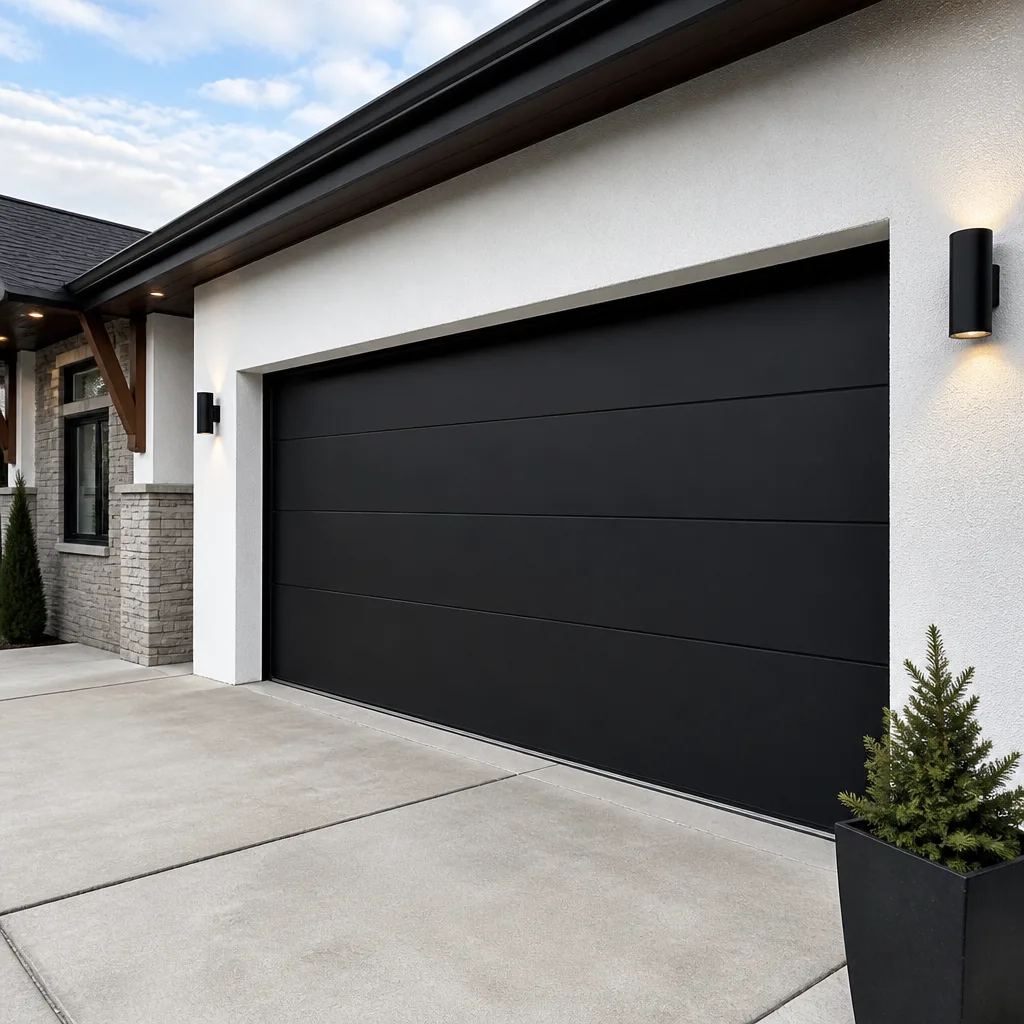 Modern flush
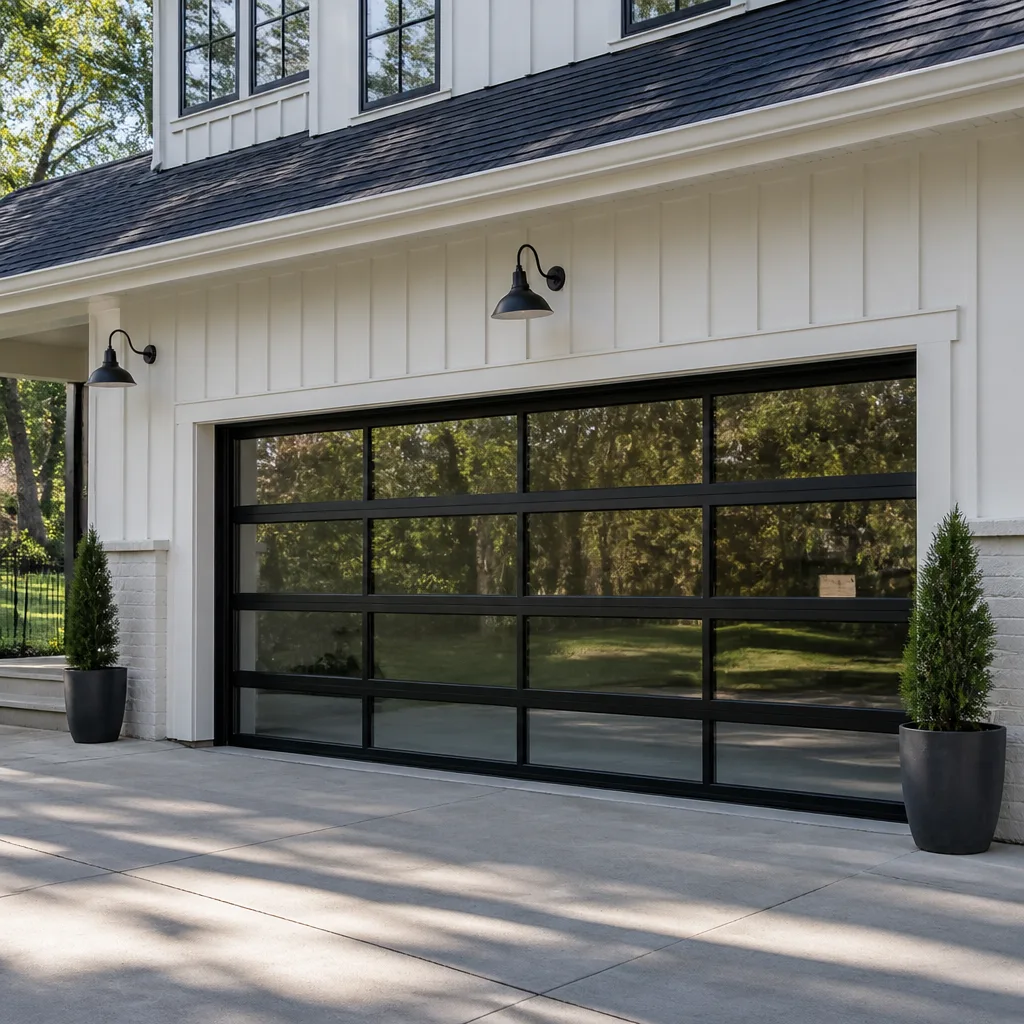 Full-view glass
 LiftMaster openers
 Chamberlain openers
Full 25-point door and opener safety check with every visit - springs, cables, rollers, tracks, and your LiftMaster or Chamberlain opener included
You get a price before we start. It does not change when the pro arrives.
Get your free estimateGarage Door Repair Troubleshooting in Stamford: Common Problems and How to Fix Them
Here’s a pattern we run into constantly: a homeowner calls about a door that “won’t open,” expecting an opener replacement, and the actual problem is a wall button with a dead battery or a photo-eye that drifted a quarter inch out of line. The second most common call is the opposite – someone spends an evening adjusting a limit switch when the real issue is a spring that’s lost tension. Both mistakes come from the same habit: treating the symptom instead of the system. A garage door is a chain of components – springs, cables, rollers, tracks, sensors, opener – and any one of them can produce the same “won’t move” complaint. In this guide, we’ll teach you to troubleshoot like a technician: rule out the cheap, safe fixes first, understand which symptoms point to which parts, and know exactly when to stop and pick up the phone in Stamford.
Quick Answer
Most garage door problems fall into four symptom groups: the door won’t move at all, it moves partway and stops, it moves but makes noise, or it moves and then reverses. The first three safe checks – wall button battery, safety sensors, and a manual release test – will solve roughly half of no-move and reversing complaints without a tool. Anything involving torsion springs, cables, or the door coming off track is a professional job, full stop.
Styles & brands we work with
- Raised-panel steel
- Carriage house
- Modern flush
- Full-view glass
- LiftMaster openers
- Chamberlain openers
Table of Contents
- The Diagnostic Decision Tree: Start With the Symptom
- The Door Won’t Move at All
- The Door Moves Partway and Stops
- The Door Moves But Sounds Wrong
- The Door Reverses Unexpectedly
- Limit Switch vs. Safety Sensor: Two Lookalike Problems
- How Stamford’s Humidity Swings Cause Seasonal Binding
- The “Stop Here” Checklist: Five Conditions That Need a Pro
The Diagnostic Decision Tree: Start With the Symptom
Most troubleshooting advice fails because it’s organized by part rather than by what the homeowner actually experiences. You don’t know your limit switch is misadjusted – you know your door closes three feet and reverses. So start with the symptom, not the component.
Here’s the framework a technician uses on arrival. It takes about five minutes and eliminates about 80 percent of possibilities before any tools come out:
- Does the opener respond at all? If the wall button and remote both do nothing, the problem is electrical or in the opener’s logic board. If the button works but the remote doesn’t, the problem is the remote or its battery.
- Does the opener run but the door stays put? That points to the manual release being engaged, a stripped gear, or a broken spring. This is the dividing line between “safe to investigate” and “stop now.”
- Does the safety sensor LED stay solid? If it blinks, the door won’t close and the cause is alignment, wiring, or sunlight interference.
- Does the door travel the full range by hand? Pull the release and lift it manually. If it fights you or won’t stay up, the springs are the likely issue.
- Does the door balance at the halfway point? A properly balanced door stays where you leave it. A door that drops or rises on its own is telling you the spring system is out of balance.
Each answer routes you down a different branch. The rest of this guide follows those branches in order of what we see most in Stamford homes – older doors on openers that have never been serviced, plus newer builds where the door has never been adjusted since installation.
The Door Won’t Move at All
A door that stays shut while the opener hums is the single most common call we get, and it’s usually one of three things: a dead remote battery, a tripped breaker feeding the opener, or a manual release that got pulled and never reset. The first two are homeowner fixes. The third requires knowing whether the door itself is safe to lift.
The safe checks, in order
- Try the wall button. If it works, the issue is remote-side. Replace the remote battery, then re-pair the remote to the opener. Re-pairing instructions are usually printed on the opener’s motor head or in the manual.
- Check the opener’s power. Look at the outlet the opener plugs into and the breaker panel. Openers often share a circuit with garage lighting, and a tripped GFCI outlet is common in older Stamford homes with attached garages.
- Look for the manual release. Every opener has a red rope handle that disconnects the door from the carriage. If it’s hanging down, someone pulled it and never re-engaged the carriage. Re-engage it only if the door travels smoothly by hand.
When the opener runs but the door doesn’t move
If the motor spins, the door stays put, and the manual release is properly engaged, one of two things is happening: the opener’s drive gear is stripped, or the spring system has failed and the opener can’t counterbalance the door’s weight alone. Stop here. A door with a broken spring can weigh 150 pounds or more, and an opener attempting to lift it under that load will strip its own gears. This is a professional diagnostic, and it’s the point where we recommend calling us instead of continuing to press the button. Our garage door repair team sees this exact scenario weekly in Stamford, and in most cases it’s a spring problem masquerading as an opener problem.
The Door Moves Partway and Stops
A door that opens a foot or two and stops is sending a very specific signal: the opener’s travel limits are out of adjustment, or something is physically binding the door. The key distinction is whether the door stops at the same point every time (limits or obstruction) or at varying points (binding or spring tension).
Here’s how to narrow it down:
- Stops at the same point, going up. Likely an up-limit switch that needs adjustment. On most openers sold under the LiftMaster, Chamberlain, and Craftsman names, this is a small dial or screw on the side of the motor head labeled “up limit.”
- Stops at the same point, going down. Likely a down-limit issue, or the safety sensors are being triggered by something on the floor – a snow shovel, a recycling bin, a curled mat.
- Stops at a random point. Binding in the tracks or rollers. A door that binds on the way up will feel stiff when you lift it by hand.
- Stops and reverses immediately. Almost always safety sensors or a force-setting problem. Skip to the reversing section.
Adjusting travel limits is a homeowner task on most openers – it’s a screwdriver job and requires no contact with moving parts. What you shouldn’t do is adjust the force settings to compensate for a door that binds. Increasing force to push through a bind is how doors come off track. Fix the bind, not the force.
Wayne Dalton and Raynor systems in particular have specific force profiles, and if a Stamford door has been “adjusted” by a previous owner to force through winter stiffness, we often find the settings need to be reset before any real diagnosis can happen. If you’ve tried adjusting limits twice and the door still stops partway, that’s a signal to garage door opener repair rather than another afternoon of dial-turning.
The Door Moves But Sounds Wrong
Noise is the most underrated diagnostic tool a homeowner has. The type of sound tells you almost exactly which part is failing, and ignoring a new noise is how a $40 roller replacement becomes a track replacement.
Here’s the noise-to-cause map we use:
- Squealing or high-pitched grinding while moving. Dry rollers or a dry torsion tube. Most rollers are sealed and can’t be lubricated – if the noise persists after lubricating the torsion tube and hinges with a garage-door-rated lubricant, the rollers need replacing.
- Loud popping or snapping. Often a cable that’s jumped its drum, or a spring that’s about to fail. If the sound came with the door suddenly not balancing, treat it as a spring issue. Do not attempt to inspect a torsion spring yourself – the spring is under enough tension to cause serious injury if it releases.
- Rhythmic thumping as the door travels. A bent panel, a loose hinge, or a roller that’s popped out of its track. Usually visible from the floor.
- A single loud bang, then the door won’t lift. Classic torsion spring failure. Stop using the door. Call a professional. This is one of the most common calls we get after our first cold snap in Stamford, when a spring that has been working all summer finally gives way.
Lubrication is the one noise fix most homeowners can safely do: a garage-door-rated spray lubricant on the torsion tube (if accessible from the floor without reaching), hinges, and roller stems. It won’t fix a worn roller or a failing spring, but it eliminates one entire category of noise. If a Stamford door is noisy in winter and quiet in summer, that’s usually a sign of a door that needs adjustment, not a failing part – which brings us to the humidity problem further down.
The Door Reverses Unexpectedly
A door that reverses on its own – whether immediately on closing or halfway down – is almost always reporting a safety sensor issue, a force setting that’s too sensitive, or a down-limit problem. The good news is that the safety sensor is the easiest system on the entire door to inspect.
The safe sensor check
- Look at the two small LED lights on the sensor units mounted on the floor near each track. One should be solid, one should be solid or blinking. If either is dark or blinking, the sensor isn’t seeing the other side.
- Wipe the sensor lenses. Dust and spider webs are the most common causes of a Stamford door reversing on a dry day.
- Check alignment. The two sensors should be aimed directly at each other. Nudge one until the LED stabilizes.
- Check for overhead obstructions. A garage light bulb, a hanging bike, a snow shovel leaning against the track – anything in the sensor’s path.
- Check for sunlight interference. A west-facing Stamford garage can get a low sun angle that overwhelms the sensor’s receiver in the late afternoon. If the door only reverses during certain hours, this is the likely cause.
If the sensors check out and the door still reverses, the next suspect is the opener’s force setting. Force settings should only be adjusted after confirming the door travels freely by hand. A door that binds halfway down and reverses isn’t a sensor problem – it’s a door problem, and increasing force masks it. That’s a professional call.
Limit Switch vs. Safety Sensor: Two Lookalike Problems
These two get confused constantly because they produce nearly identical symptoms – the door stops or reverses during close – yet they have completely different causes and completely different fixes. Knowing which one you’re dealing with saves both time and money.
The limit switch
The limit switch lives inside the opener’s motor head and tells the opener how far to travel before stopping. When it drifts out of adjustment, the door stops short of the floor (you’ll see a gap) or overtravels and slams. The fix is a screwdriver adjustment on the motor head, done by the homeowner or by a technician on a service call. Limit switch issues have nothing to do with people or objects in the doorway.
The safety sensor
The safety sensor lives at the bottom of the tracks near the floor and tells the opener whether anything is in the way. When it’s misaligned, dirty, or blocked, the door won’t close at all if the obstruction is confirmed – or it reverses the moment it detects motion. The fix is alignment, cleaning, or replacing the sensor units.
The tell
Here’s the fastest way to know which you have. Press the wall button and watch the door. If the door stops cleanly with a gap at the bottom, the limit is the problem. If the door moves partway and then reverses, or refuses to move at all when closing, the sensor is the problem. If both are happening at different times, you may have both – and that’s the threshold for a technician visit.
This is also the exact scenario where brand familiarity pays off. A technician who works on LiftMaster, Genie, and Chamberlain openers every day knows the limit and force adjustment locations on each, and knows which openers have self-diagnostic codes that reveal the answer instantly. There’s no universal fix; the diagnosis is specific to the unit.
How Stamford’s Humidity Swings Cause Seasonal Binding
Stamford homes spend the winter in cold, dry air and the summer in warm, humid air, and the difference is enough to physically change the shape of a garage door. This is the most common source of “my door worked all summer and now it’s fighting me” complaints, and it’s the one most homeowners blame on the opener.
Wood doors
Wood doors absorb moisture in the humid summer and swell, typically by a fraction of an inch across the width of the door. That swelling can push panels against the tracks, cause the door to bind halfway up, and even bow the panel sections. In winter, the same door shrinks and gaps open up. The key symptom of a wood door binding is a problem that appears or disappears with the season and often gets worse over multiple years.
Steel doors
Steel doors don’t swell, but steel and its hinges and tracks expand and contract at different rates. The result is that in Stamford summers, a door that was properly adjusted in January can start scraping its track in July. Steel doors also accumulate condensation on the inside of the panel during humid spells, which accelerates wear on painted surfaces and the hinges.
What this means for troubleshooting
If your door only binds in certain months, don’t touch the force settings on the opener. That’s a door adjustment problem – usually track alignment, roller condition, or a hinge issue – and increasing the force to push through it will shorten the life of the door. The seasonal fix is a professional adjustment, typically once at the start of summer. This is where a generalist handyman tends to misuse the opener force screws; a specialist who works on Amarr and Clopay panel systems knows the right track spacing and how far to adjust.
If you’re seeing seasonal binding in a Stamford home with a door that hasn’t been serviced in a few years, the answer isn’t another opener; it’s a door adjustment and roller inspection. That’s part of what our Clover Garage Door Service team does on every diagnostic visit.
The “Stop Here” Checklist: Five Conditions That Need a Pro
Most troubleshooting is safe. These five conditions are not. If any of them is true, stop what you’re doing and call a technician – no amount of confidence or YouTube watching changes the risk.
- Any visible gap, snap, or break in a torsion spring or extension spring. A broken torsion spring is under enough tension to cause serious injury. Do not touch it, do not look closely at it, do not try to remove it.
- A door that won’t stay open when lifted by hand. This means the spring system has failed or is out of balance. The door’s weight is no longer counterbalanced, and it can slam shut.
- Any cable that’s loose, frayed, off its drum, or visibly twisted. Cables are load-bearing. A snapped cable releases the tension holding the door. Do not attempt to re-route a cable yourself.
- A door that’s off track, even slightly. A door that’s jumped its track can fall. Don’t force it back into the track, and don’t run the opener.
- Anything that requires you to be on a ladder above the door or to reach into the opener’s motor head while the door is in motion. If you’re not sure what you’re looking at, the answer is “call.”
We genuinely mean this. In our experience, a homeowner who stops at the checklist and calls a professional saves the cost of a diagnostic visit and the cost of the resulting damage. Springs, cables, and off-track doors are the three categories where DIY attempts do more harm than good, and it’s not close. If you’re not sure if your situation fits the list, call us and describe what you see – we’ll tell you whether it’s a same-day call or a scheduled visit.
Common Mistakes to Avoid
We’ve watched a lot of homeowners work through garage door issues, and the same mistakes come up repeatedly. Here are the ones that turn a small fix into an expensive one.
- Adjusting the force settings to fix a binding door. The force setting is a safety limit, not a repair tool. Increasing force to push through a bind is how doors come off track and how cables fail. Fix the bind, never the force.
- Ignoring a new noise because the door still opens. A new sound is the cheapest warning you’ll get. A worn roller or a dry hinge caught early is a small fix; caught late, it’s a panel or track replacement.
- Replacing the opener when the door is the problem. If the opener hums and the door doesn’t move, the opener’s usually fine. The spring, the cable, or the manual release are the likely culprits. A new opener installed on a broken door will strip itself in days.
- Spraying lubricant on track surfaces. Tracks should be clean and dry. Lubricant on a track collects dust and grit and makes rollers slide instead of roll, which accelerates wear.
- Assuming a Stamford door that binds in summer needs a new door. Seasonal binding in a wood door, or a steel door that’s tight in July, is almost always an adjustment, not a replacement. Don’t let anyone sell you a door when a service call will do.
- Trusting a generalist handyman with opener diagnostics. A handyman can hang a shelf, but limit switch and force calibration on a LiftMaster or a Raynor is a specific skill. Generalist visits tend to end with “you probably need a new opener” – not because the opener failed, but because the diagnostic tools weren’t there.
- Replacing one torsion spring instead of the pair. When one spring breaks, the other is typically the same age and has taken the same amount of work. Replacing one and leaving the other often means a second call within a few months. Symptom-focused thinking again: fix the system, not the symptom.
See the difference
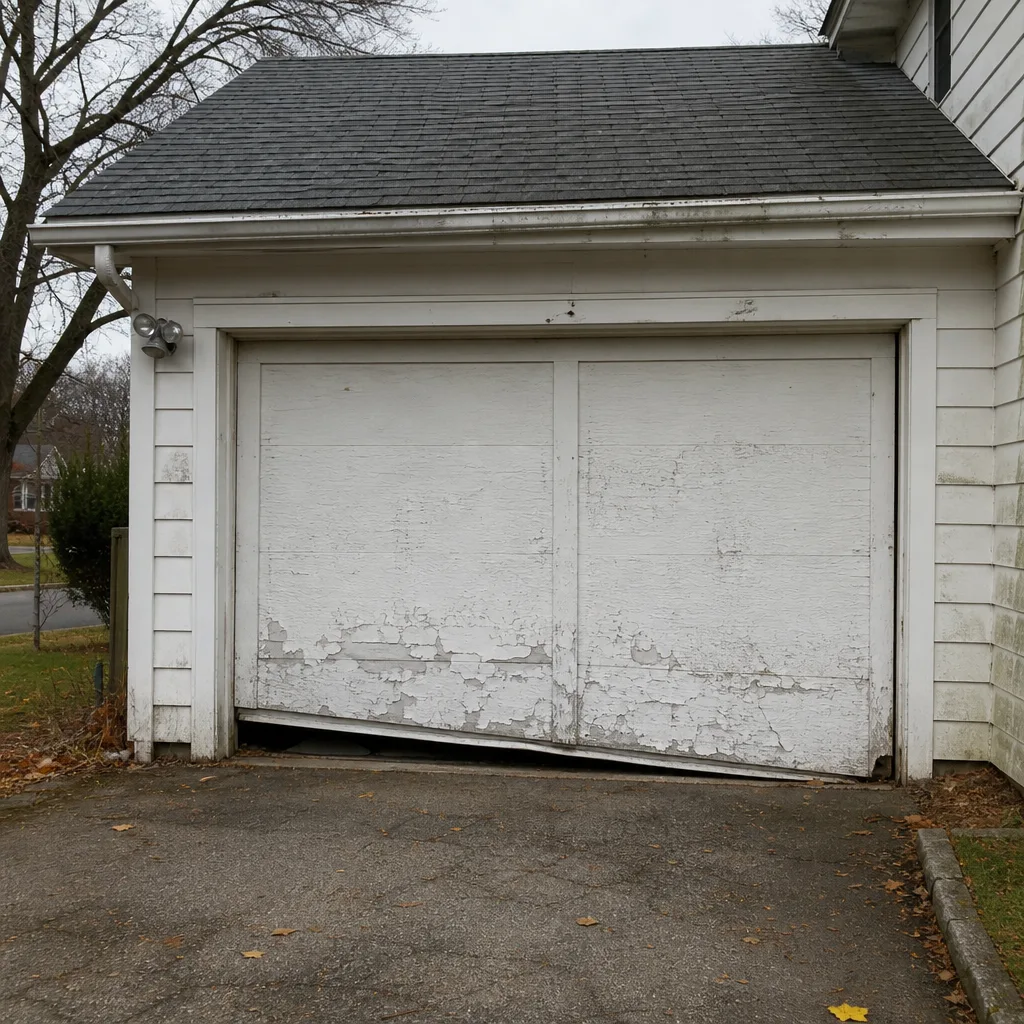 Before
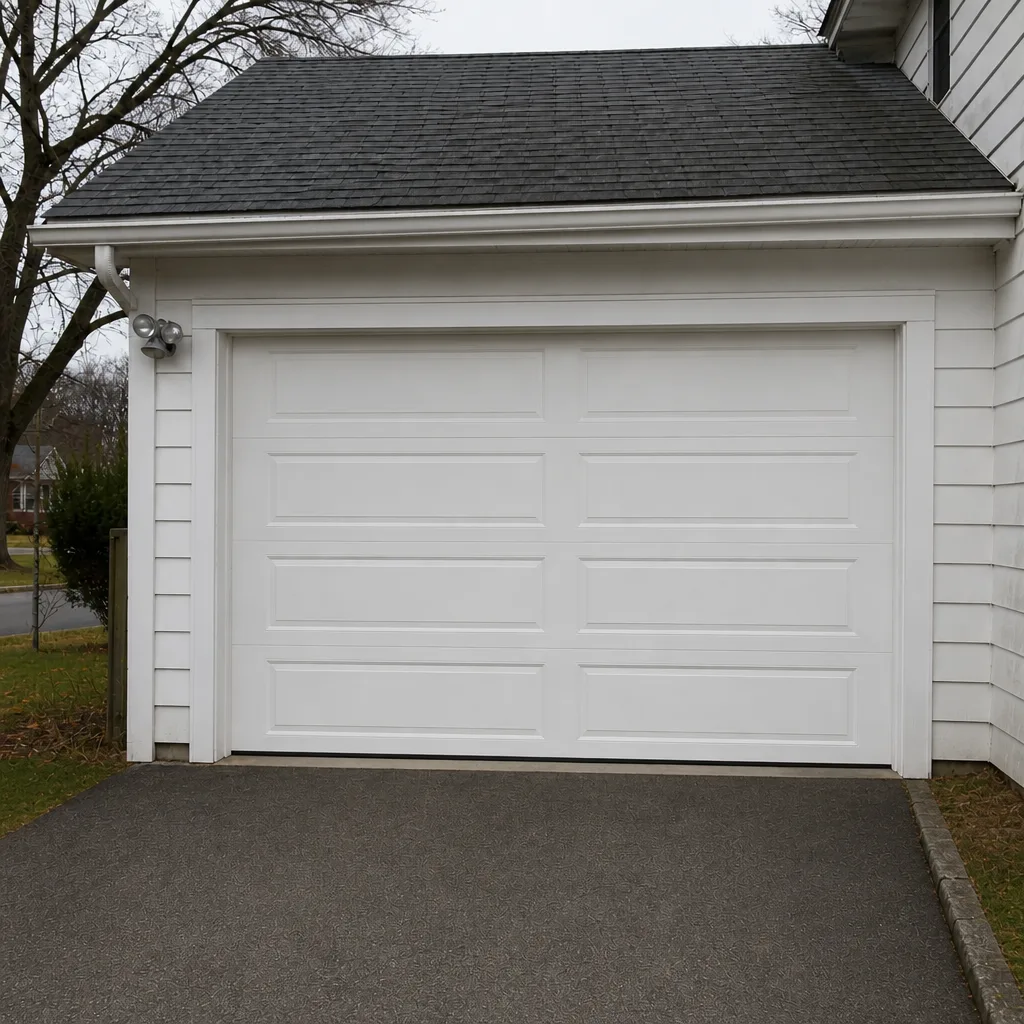 After
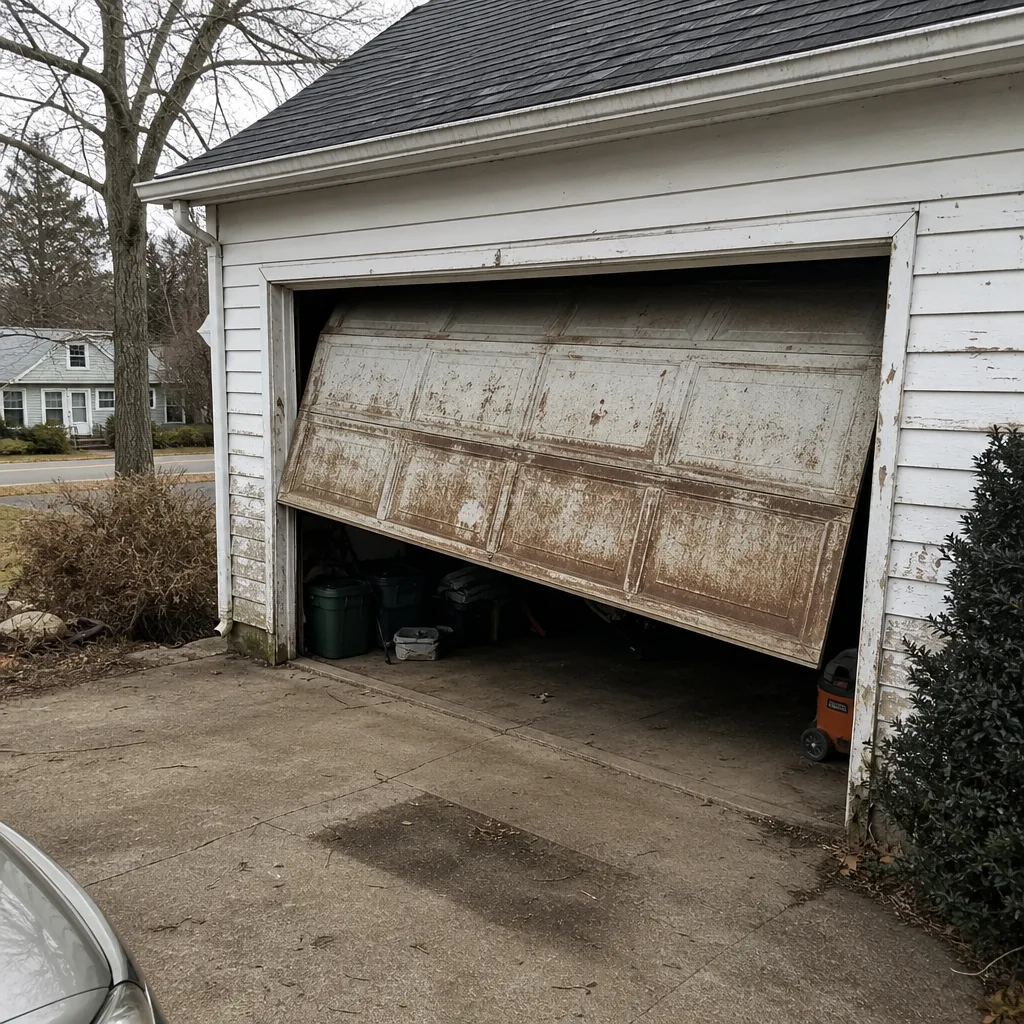 Before
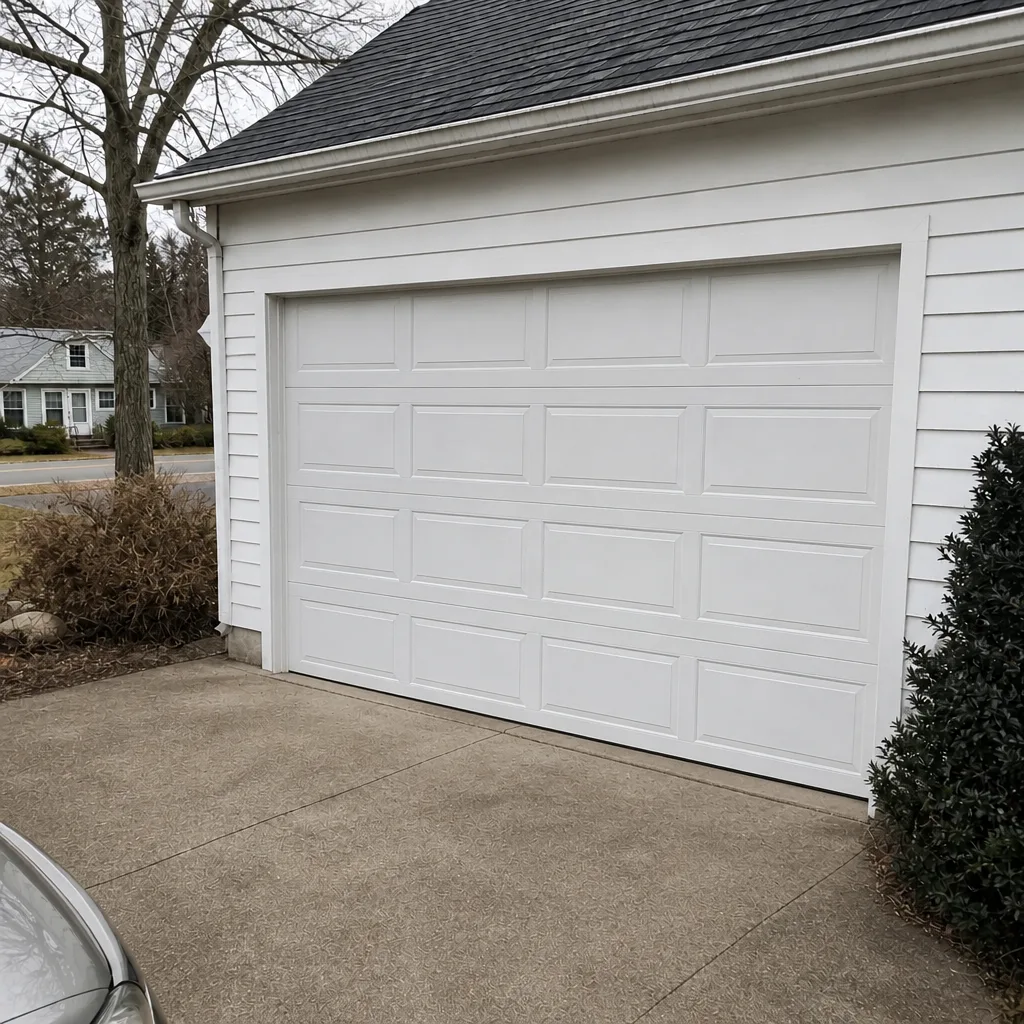 After
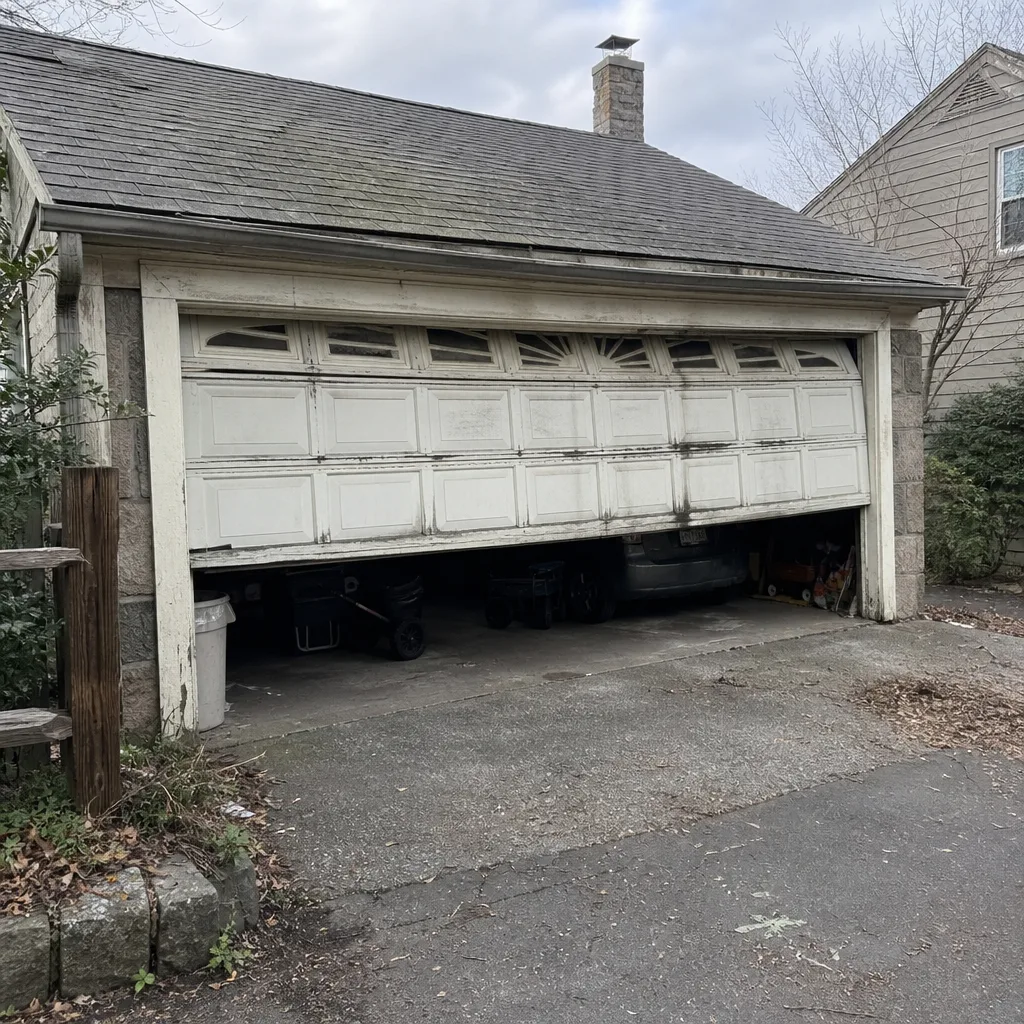 Before
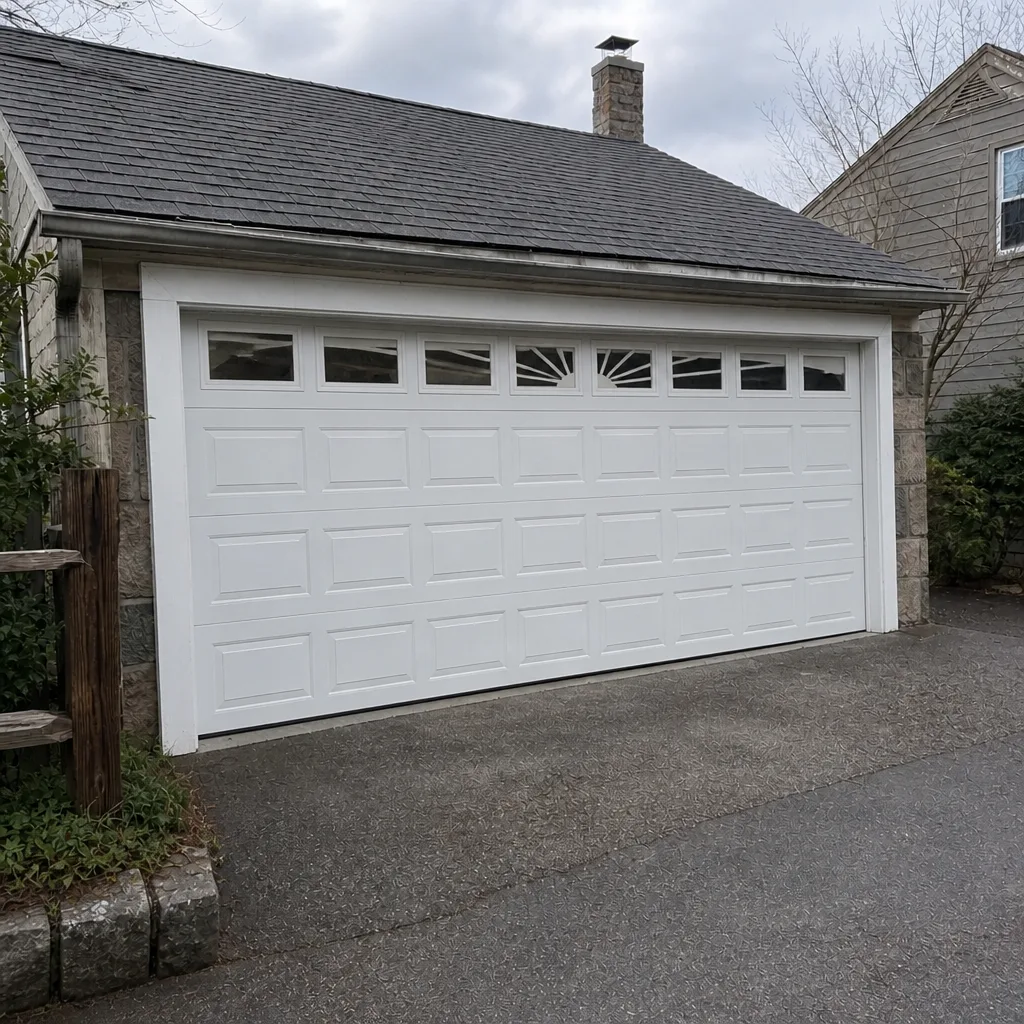 After
When to Call a Professional
Some garage door problems are genuinely self-diagnosable and self-fixable. Others have a clear “stop and call” line. The conditions are: a broken spring, a loose or frayed cable, a door that won’t stay open by hand, a door that’s jumped its track, a repeated reversing problem that sensors don’t fix, or an opener that runs but won’t move the door even after a manual release test. Those are the calls worth making the same day. Beyond that, if you’ve tried the safe checks twice and the door still misbehaves, the next step is a professional diagnosis. Clover Garage Door Service offers free estimates in Stamford – call Stamford homeowners can reach us at (855) 632-3568. We answer 24/7. Fast dispatch from 7am to 7pm, Sunday through Friday. We work on the brand you already have, and our technicians have up to 8 years of experience with systems from LiftMaster, Chamberlain, Genie, Clopay, Amarr, Wayne Dalton, Craftsman, and Raynor.
Frequently Asked Questions
It’s almost always the up-limit switch on the opener being out of adjustment, or a physical bind in the tracks or rollers. Check whether the door stops at exactly the same point every time – if so, it’s likely the limit; if the stopping point varies, it’s likely binding. Either way, it’s a fixable problem and doesn’t usually mean a new opener. Call (855) 632-3568 for a free estimate if you’d rather have it diagnosed on-site.
Watch the door’s behavior. A clean stop with a gap at the bottom means the limit switch needs adjustment. A door that reverses partway, or won’t move when closing at all, means the safety sensors need attention. The sensors have small LED lights that confirm alignment; the limit switch does not. If both are happening, call a technician – that’s a both-problems scenario.
No. A torsion spring is under enough tension to cause serious injury, and this is the single piece of the system that is not a homeowner job regardless of confidence level. The door’s weight is designed to be counterbalanced by the spring; when it fails, the door can fall or the spring can release with lethal force. Call a professional.
Humidity. Wood doors absorb moisture in the humid months and swell enough to push panels against the tracks. Steel doors and their tracks expand and contract at different rates, so a door adjusted in winter can scrape in July. This is a seasonal adjustment issue, not a sign that you need a new door. Call (855) 632-3568 and we’ll schedule a track and roller adjustment.
For safe tasks – remote battery replacement, safety sensor cleaning and alignment, limit switch adjustment, lubrication – yes, and we encourage it. For anything involving torsion springs, cables, off-track doors, or reaching into the opener’s motor head, no. Follow the “stop here” checklist above. If you’re on the fence, call us and describe what you see.
Yes. We work on the brand you already have, and our technicians are experienced with systems from LiftMaster, Chamberlain, Genie, Clopay, Amarr, Wayne Dalton, Craftsman, and Raynor. Garage doors are all we do, so we’re not learning your opener for the first time when we arrive. Call (855) 632-3568 for a free estimate.
We answer 24/7. A call outside dispatch hours is booked into the next opening, Sunday through Friday, 7am to 7pm. We’re closed on Saturday. The estimate itself is free whether you call on Sunday morning or a Wednesday afternoon.
The Bottom Line
The core of garage door troubleshooting is separating symptom from system. A “won’t open” complaint can come from six different root causes – remote battery, opener power, manual release, stripped gear, failed spring, or a bound door – and the fix for each is completely different. Start with the safe checks in the decision tree, use the noise map to narrow down mechanical issues, and honor the stop-here checklist without exception. Stamford’s humidity swings mean seasonal binding is common and often misread as opener failure, so don’t adjust force to push through a bind. When the safe checks are exhausted, call (855) 632-3568 for a free estimate. We answer 24/7.
Written by the team at Clover Garage Door Service.