
Last updated November 15, 2026
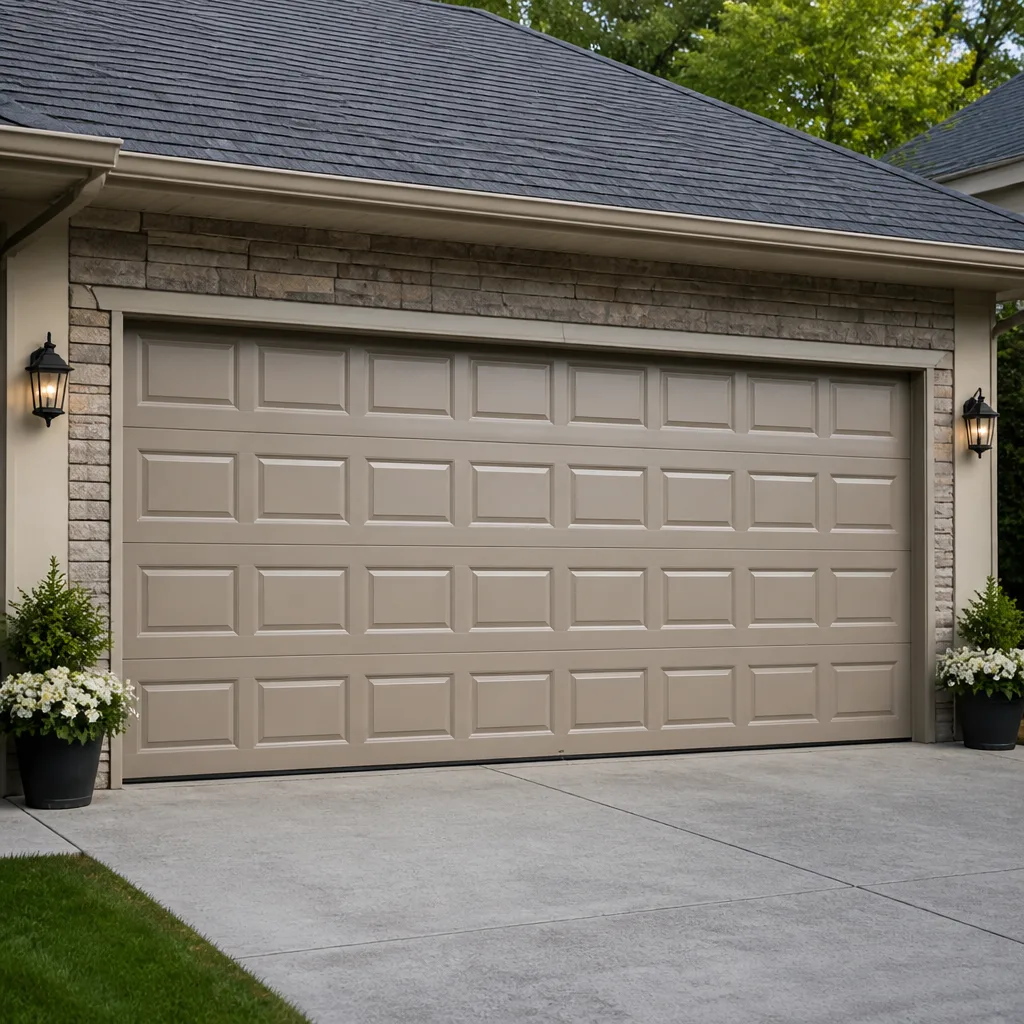 Raised-panel steel
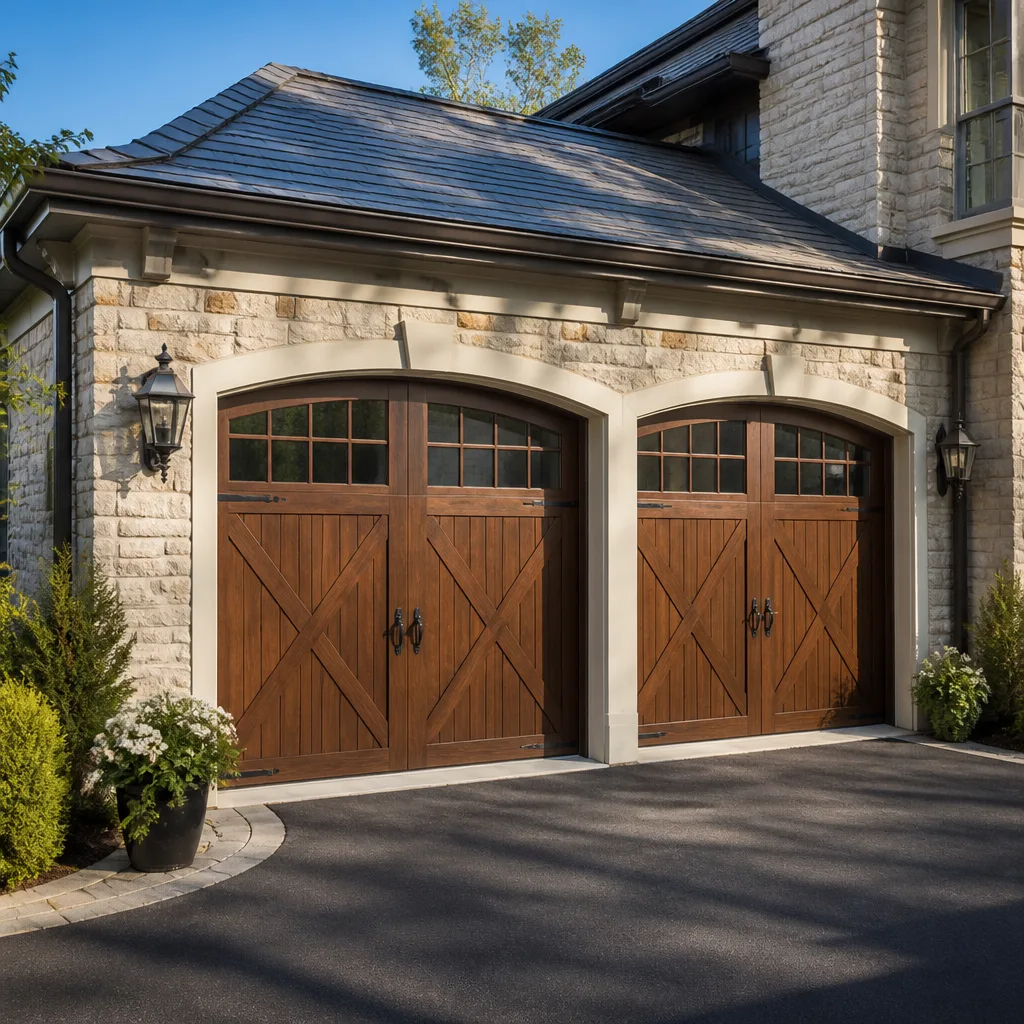 Carriage house
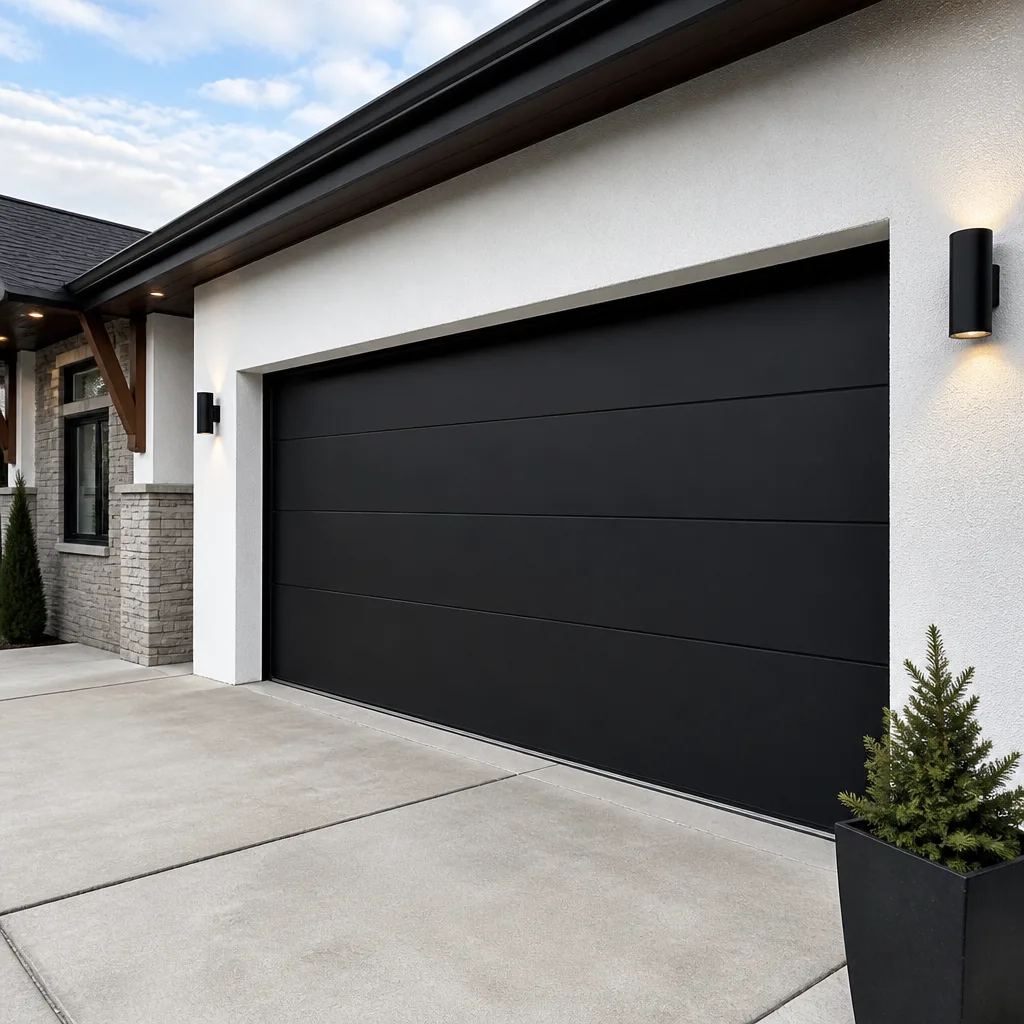 Modern flush
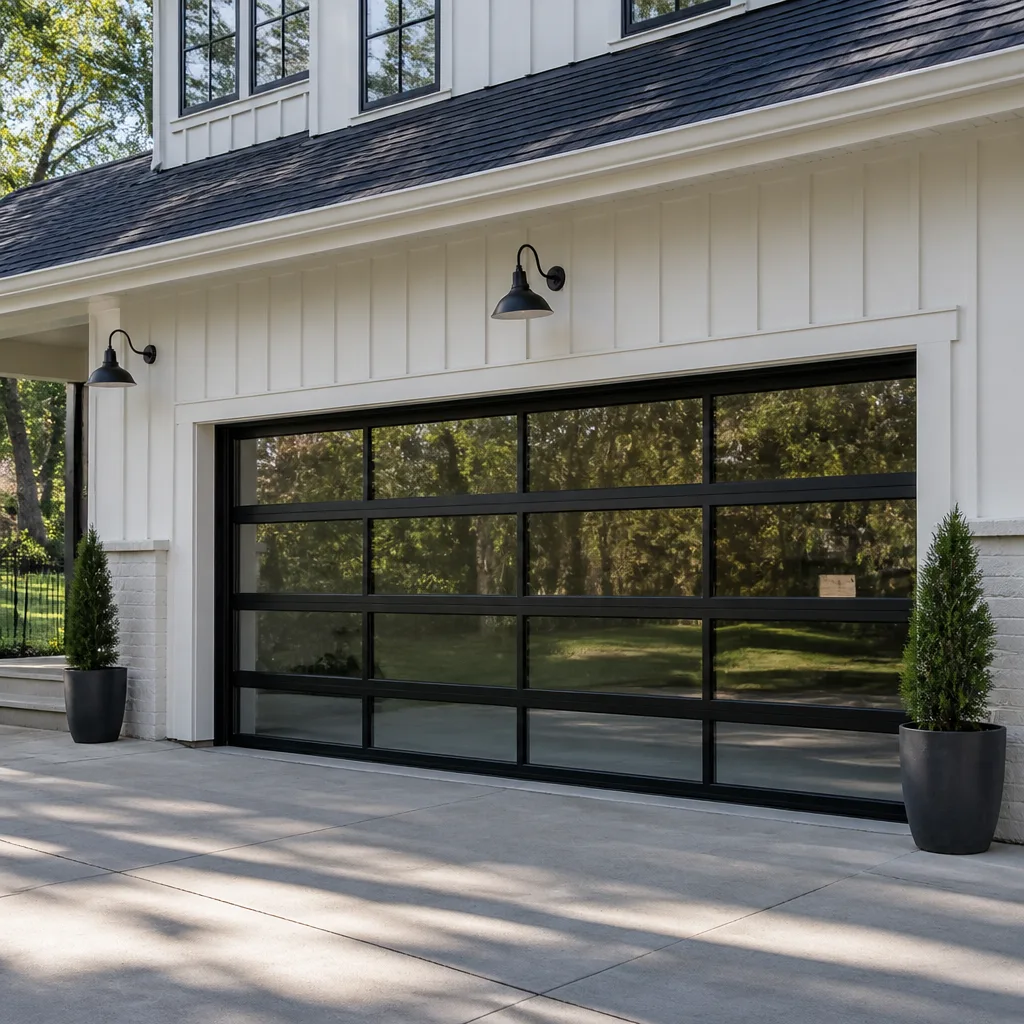 Full-view glass
 LiftMaster openers
 Chamberlain openers
Full 25-point door and opener safety check with every visit - springs, cables, rollers, tracks, and your LiftMaster or Chamberlain opener included
You get a price before we start. It does not change when the pro arrives.
Get your free estimateGarage Door Emergency Preparedness Guide for Stamford Homes
Most Stamford homeowners assume their biggest garage door risk is a broken spring. In our experience, the more common emergency is quieter than that: the opener loses power during a storm, the car is trapped inside, and nobody has ever pulled the manual release cord. When they finally try, they pull it wrong and the door slams or jams. We can’t invent a statistic here, but the pattern is real, and it shows up across Stamford every storm season.
This guide walks you through the preparation that actually matters: how to use a manual release on the three opener types we see most in Stamford homes, how to get ready before a nor’easter or tropical storm, what to do in a power outage, what to do if the door gets stuck mid-travel, and which items belong in the garage so you’re not searching in the dark. We’ll also tell you when to stop and call.
Quick Answer
Garage door emergency readiness in Stamford comes down to three things: knowing how to use your opener’s manual release (and pulling it only when the door is fully closed), keeping a small kit in the garage so you’re not searching in the dark, and knowing when a stuck door is safe to assess and when forcing it will cause a bigger, more expensive problem. Battery backup openers help during outages, but they only help if the battery is tested. A door stuck mid-travel, a snapped spring, or a door that’s come off its track is a call to a specialist, not a project for a flashlight and a pry bar.
Styles & brands we work with
- Raised-panel steel
- Carriage house
- Modern flush
- Full-view glass
- LiftMaster openers
- Chamberlain openers
Table of Contents
- How to Use the Manual Release on the Three Opener Types We See Most in Stamford
- Storm Preparation Before a Nor’easter or Tropical Storm
- Power Outage Protocol: Battery Backup, Manual Override, and When to Call
- When the Door Is Stuck Mid-Travel: The Safe Way to Assess It
- What to Keep in the Garage for a Door Emergency
- Winter Weather, Freeze-Thaw, and the Stamford Door
- Brand Matters Less Than You Think (and More Than You’d Guess)
- Frequently Asked Questions
How to Use the Manual Release on the Three Opener Types We See Most in Stamford
The manual release is the single most useful thing on your garage door, and the single most misunderstood. Almost every residential opener has one. The mechanism differs slightly depending on the opener, but the drill is the same. Here is what we walk homeowners through when we’re on-site in Stamford, and what you can practice before you ever need to use it in a storm.
Before anything else: the door must be fully closed. Pulling the release cord on a door that’s partway up, or that has a broken spring, means the full weight of the door comes down at once. Garage doors weigh more than most people expect, and the release exists to remove the opener from the equation, not to hold the door up. A trained technician is the right person to handle a stuck door with a suspected spring failure. If you’re not certain the door is fully down and the spring is intact, stop and call.
The three opener types we see most in Stamford
- Chain-drive openers with a standard trolley release (typical in older Stamford homes). Look for a short cord hanging from the rail near the door. With the door fully closed, pull the cord straight down and let it hang. The trolley disconnects from the chain, and you can lift the door by the handle. To re-engage, pull the door up by hand until the trolley clicks back onto the chain, then run the opener once. The most common mistake is pulling the cord with the door open, which sends it down fast.
- Belt-drive openers with a lift-and-release tab (common on newer installs using Chamberlain or LiftMaster systems). On these, the release is still a cord, but the tab on the trolley is shaped differently. Same rule applies: fully closed before you pull. Some belt-drive units also have an electronic lock above the trolley. If the door won’t move by hand after release, check whether that lock is engaged, and if you’re not sure, call rather than force it.
- Screw-drive and jackshaft openers (side-mount units, more common in newer Stamford construction with higher ceilings). Jackshaft openers mount beside the door rather than on the ceiling, and some have a manual release lever rather than a cord. If you can’t find a pull cord, don’t assume there isn’t a release. Look at the side of the motor unit for a lever or a bypass. The mistake here is forcing the door up without releasing it, which puts strain on the door’s torsion system.
If your system doesn’t match any of these, or if you can’t identify the release, that’s not a problem to solve at 11pm during a storm. We work on the brand you already have, and we can walk you through your specific unit during a routine visit long before it becomes an emergency. Call garage door opener repair in Stamford when you want that checked.
Storm Preparation Before a Nor’easter or Tropical Storm
Stamford sees a real range of storm weather: nor’easters in winter, tropical systems in late summer and fall, and the wind-driven rain that comes with both. The preparation window is different for each, but the checklist is similar. Do this work before the storm is on the radar, not the afternoon it’s forecast to arrive.
- Test the door’s balance. With the opener disconnected, a properly balanced door should lift by hand with modest effort and stay in place about halfway up. If it drops or feels heavy, a spring is likely weakening, and that tends to fail at the worst possible moment. Have it looked at before storm season.
- Check the weather seal at the bottom of the door. A worn bottom seal lets wind-driven rain in, which is exactly what a nor’easter delivers. A new seal is cheap, easy to source, and gives the door a much better shoulder against horizontal rain.
- Clear the tracks. Debris and grit in the track cause binding, and binding is what fails when the door is fighting wind pressure. A quick wipe-down before the season helps more than people realize.
- Check that the safety reverse works. Place a roll of paper towels under the door and run it closed. It should reverse on contact. This is a fundamental safety check, and it’s the first thing a trained technician verifies on any service call.
- Photograph the door in the closed position. If wind or a falling branch damages the door, having a clear “before” photo makes any insurance conversation simpler.
- Remove loose items from in front of the door. Trash cans, garden tools, and kids’ toys become projectiles in high wind. Anything that gets pushed under the door can damage the bottom panel and the seal.
For homeowners in flood-prone parts of Stamford, the door is also an opening in the building envelope. If water is expected to reach the door, close it fully, and do not try to open it by hand to move the car mid-storm. Move the car before the water arrives, or leave it. Getting out of the garage safely matters more than the vehicle.
Power Outage Protocol: Battery Backup, Manual Override, and When to Call
During a Stamford power outage, the correct sequence is: check the opener, check the manual release, and then decide whether the situation is a “wait for power” or a “call a specialist.” A battery backup opener is the first line of defense. If you have one, it should keep the door operating for a limited number of cycles, and testing it once a season tells you whether the battery still has life. If you don’t have one, the manual release is your access route.
What to do, in order
- Try the wall button and one remote. If neither works and nearby lights are on, the problem is the opener, not the grid. If the whole house is dark, the power is out.
- If you have a battery backup opener, listen for the motor to start up when you press the button. A weak battery will sometimes cycle the door once and then stop. If that happens, stop using it and switch to the manual release.
- If you don’t have battery backup, use the manual release method above. Door fully closed, pull the cord, lift by hand.
- Re-engage the opener once power returns. Pull the door up by hand until the trolley clicks in, then cycle the opener once. Don’t leave the trolley disconnected for long, because the door will be lifting against its springs alone.
- Call us if the door won’t lift by hand after release, if it feels heavier than usual, or if you hear a bang from the spring area. These are not “wait for power” situations. This is when the door needs a trained technician.
You don’t have to be without a car for long. We answer 24/7. A call outside dispatch hours is booked into the next opening, Sunday through Friday, 7am to 7pm. Fast dispatch from 7am to 7pm on a storm day is a realistic window, and that’s when most Stamford homeowners want the car back.
When the Door Is Stuck Mid-Travel: The Safe Way to Assess It
A door stuck partway up is the scenario where homeowners get hurt and where small problems get expensive. The door is a heavy system under tension at both ends, and it’s being asked to hold itself in a position it was never designed to hold indefinitely. Assess, don’t manipulate. Here is the safe order of operations.
- Stop pressing the button. Repeatedly cycling a stuck door stresses the opener, the limits, and the springs. If the door isn’t moving, the opener isn’t going to fix it by trying again.
- Look at the tracks. Are the rollers actually in the track, or is one popped out? A popped roller means the door is unsupported on one side, and forcing it down is a real injury risk.
- Look at the springs and cables. A snapped spring is visible as a gap in the coil. Never touch a torsion cable. They’re under extreme tension, and a snapped cable can cause serious injury. If either spring or cable looks wrong, stop and call.
- Look at the opener trolley. Is it jammed at a limit, or is the chain slack? A jammed trolley may be a limit switch problem rather than a door problem, which is a repair we handle routinely.
- Don’t force it. A door stuck mid-travel sometimes has one underlying problem (a snapped spring, a broken cable, a stripped gear) and a homeowner forcing it down sometimes creates three. Forcing it can bend the tracks, break a panel, and stress the opener. The repair that started as a spring replacement becomes a panel and track job.
If the door is stuck in the open position and a storm is coming, the priority is getting it closed safely. If that’s not possible, get the car out and leave the door alone. We’ve seen this in Stamford enough times to know that waiting for a specialist is often the cheaper route, even when it feels slower in the moment. Call garage door repair when the door won’t move and you can’t identify why.
What to Keep in the Garage for a Door Emergency
A small, specific kit means you’re not searching in the dark for the flashlight while the door hangs open. Keep these items together, in a labeled bin near the door, and replace anything you use.
- A bright flashlight with fresh batteries. The garage goes dark when the opener’s light fails, and you need both hands free. A headlamp works better than a handheld.
- A printed card with your opener’s model number, your door’s brand, and the number for a repair specialist. When the power is out, your phone may be low, and the sticker on the opener is not always easy to read in the dark. Write it down once and keep it with the flashlight.
- A short step stool. Some manual release tabs are easier to reach with a step, and the last thing you want in a storm is to be balancing on a chair. Keep it stable and near the door.
- A pair of work gloves. Door panels and tracks have sharp edges. Gloves cost little and prevent a cut that complicates an already difficult evening.
- A spare garage door remote with a fresh battery, stored in the house rather than the car. If one remote fails, a spare gets you in without pulling the release.
- A battery backup test reminder. A small note on the opener itself, with the last test date written in pencil, so you know when to test it again.
- A hand broom and a rag. Sweeping grit out of the track before a storm is a two-minute job that prevents binding.
None of these replace a trained technician, and none of them let you safely work on a spring or a cable. But they turn a confusing, dark situation into a manageable one.
Winter Weather, Freeze-Thaw, and the Stamford Door
Stamford winters bring repeated freeze-thaw cycles, and those cycles are tough on a garage door. Water gets into the bottom seal and the track, freezes overnight, and the door fights that ice on the way up. Over a season, that’s a lot of strain on the opener, the springs, and the panels. It’s also when we see the most “door won’t close all the way” calls.
The fix is mostly maintenance. Lubricate the rollers, hinges, and springs with a garage-door-specific lubricant before the cold sets in. Check that the bottom seal isn’t holding water. Make sure the safety reverse still works after the first hard freeze, because a stiff seal can affect how the door reads an obstruction. And if the door is a wood model (some Clopay and Amarr doors are wood or wood-composite), check for swelling and repaint any bare spots before winter.
Snow and ice also matter for access. If you’re relying on the door for storm evacuation, keep the drive and the apron in front of the door clear. A door that opens onto a snowbank is a door you can’t use.
Brand Matters Less Than You Think (and More Than You’d Guess)
Homeowners in Stamford often ask whether their brand limits who can work on their door. It doesn’t, in our case. Garage doors are all we do, and we service the brand you already have across the eight major systems we’re certified on: LiftMaster, Chamberlain, Genie, Clopay, Amarr, Wayne Dalton, Craftsman, and Raynor. The point of that range is that a Clopay door and a Wayne Dalton door fail in different ways, and a Craftsman opener and a Genie opener have different release mechanisms. A generalist handyman or a single-brand dealer won’t know those differences as well. We do, because the whole company is focused on this one product category.
That matters most in an emergency. A door stuck mid-travel on a Wayne Dalton torsion system is not the same diagnosis as a door stuck on a Clopay extension-spring system. The safe way to assess it is different. The parts are different. The right answer might be “release and re-engage” on one and “do not touch, call us” on the other. For homeowners who want a second set of eyes before storm season, Clover Garage Door Service can check the door, opener, and release in a single visit.
See the difference
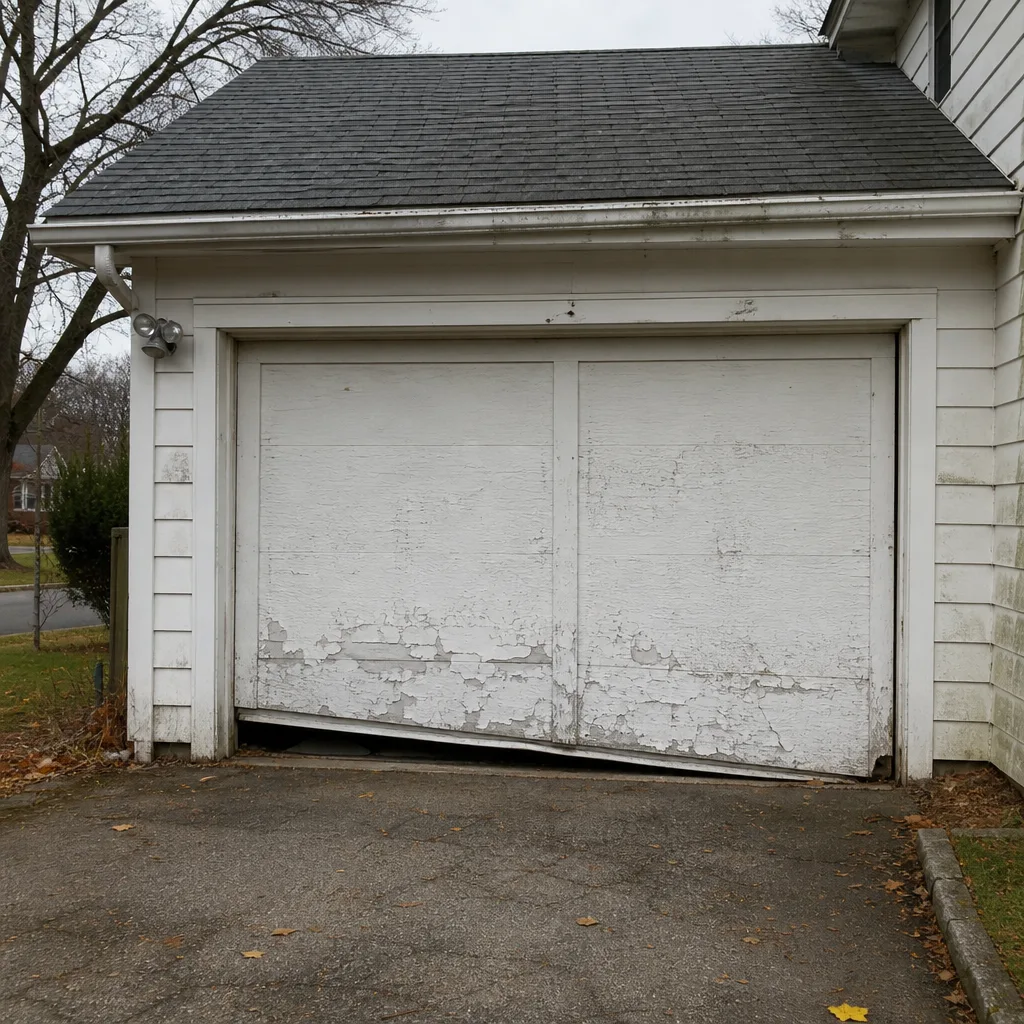 Before
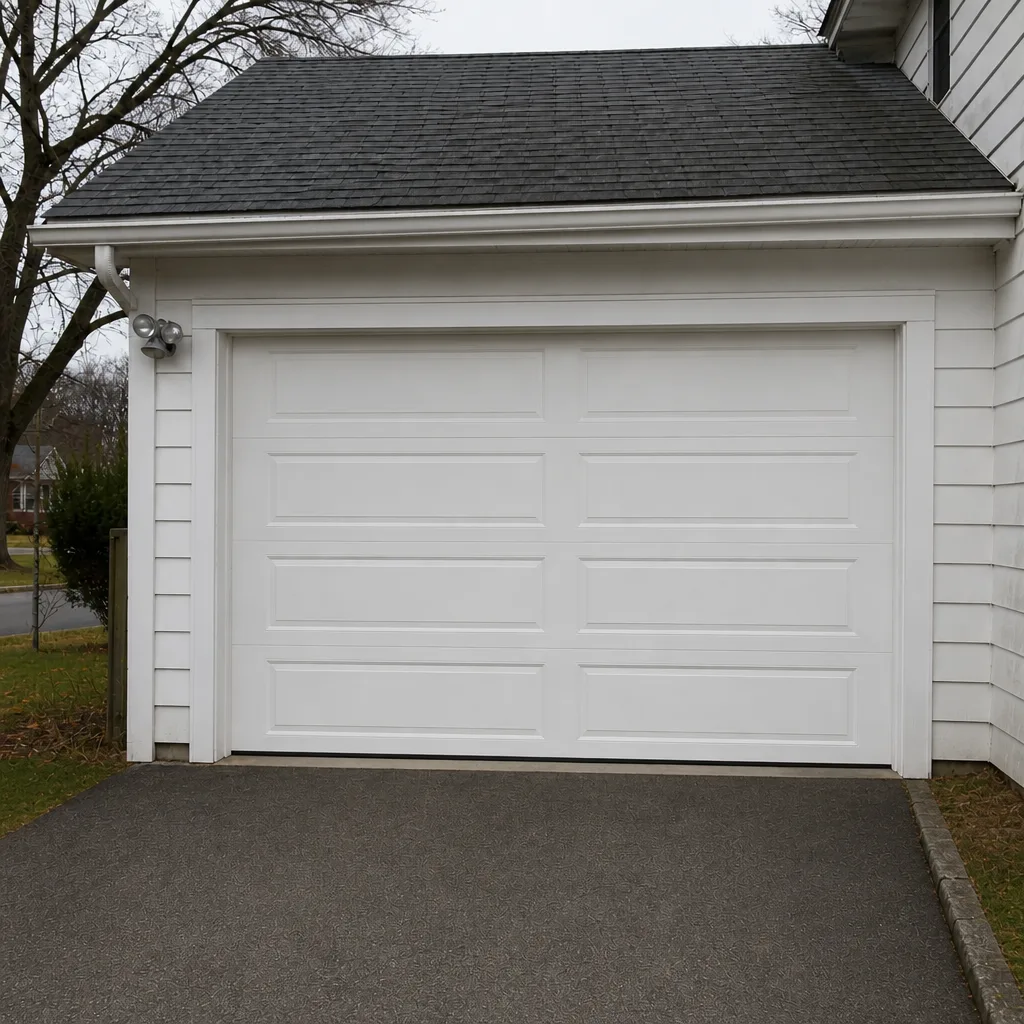 After
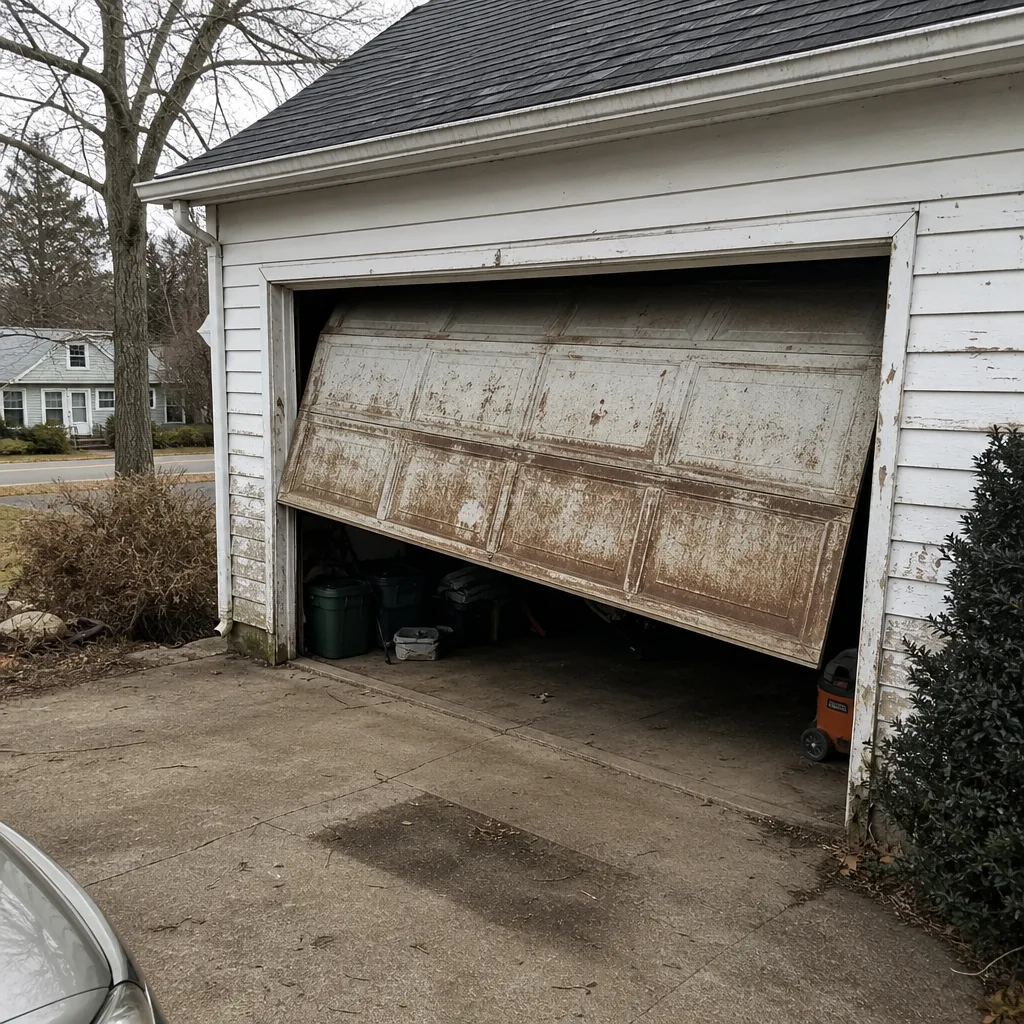 Before
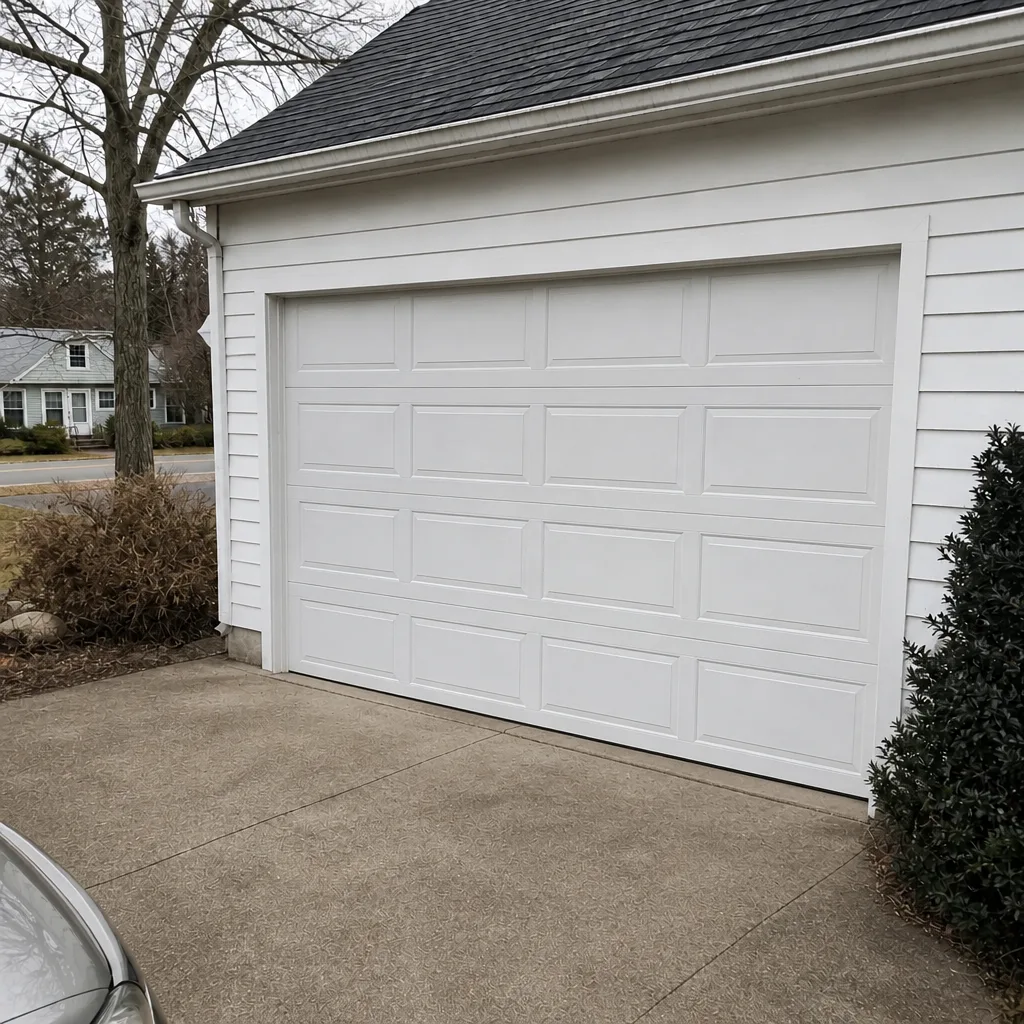 After
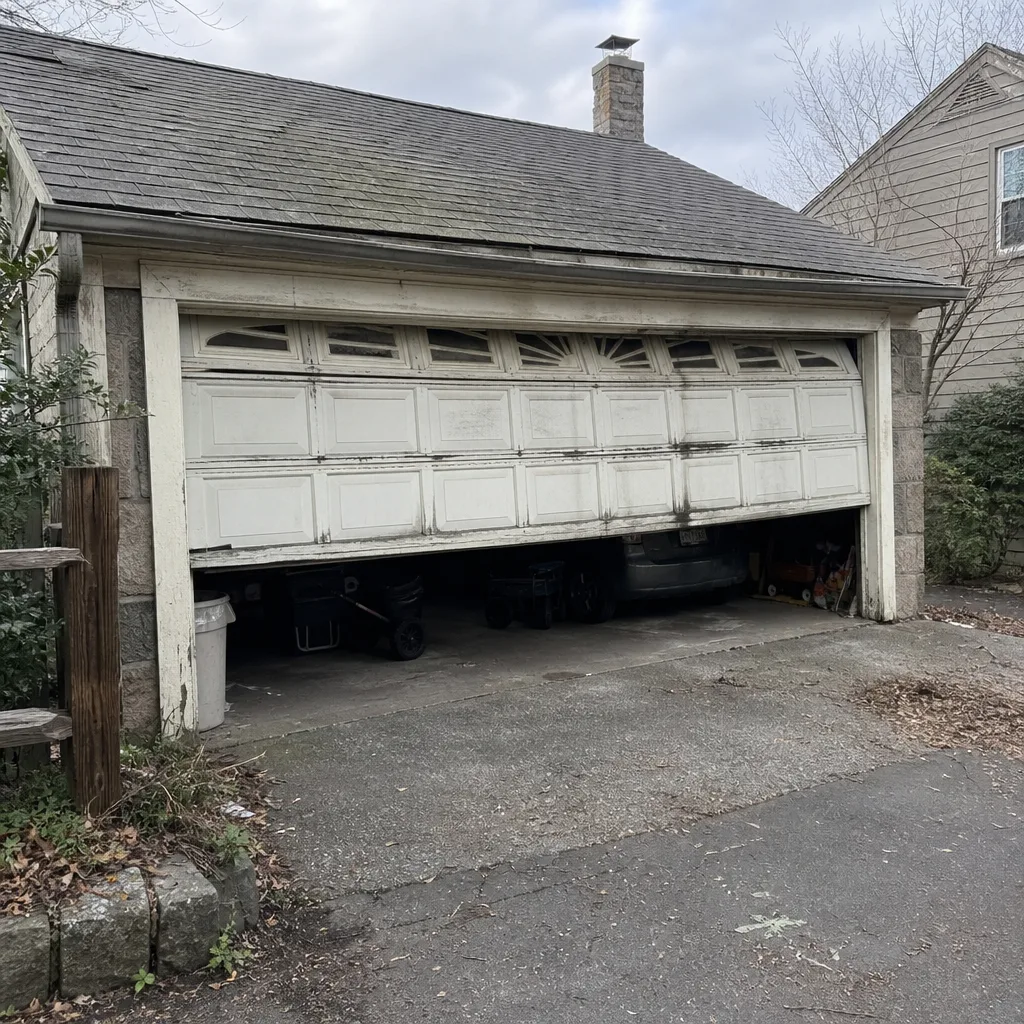 Before
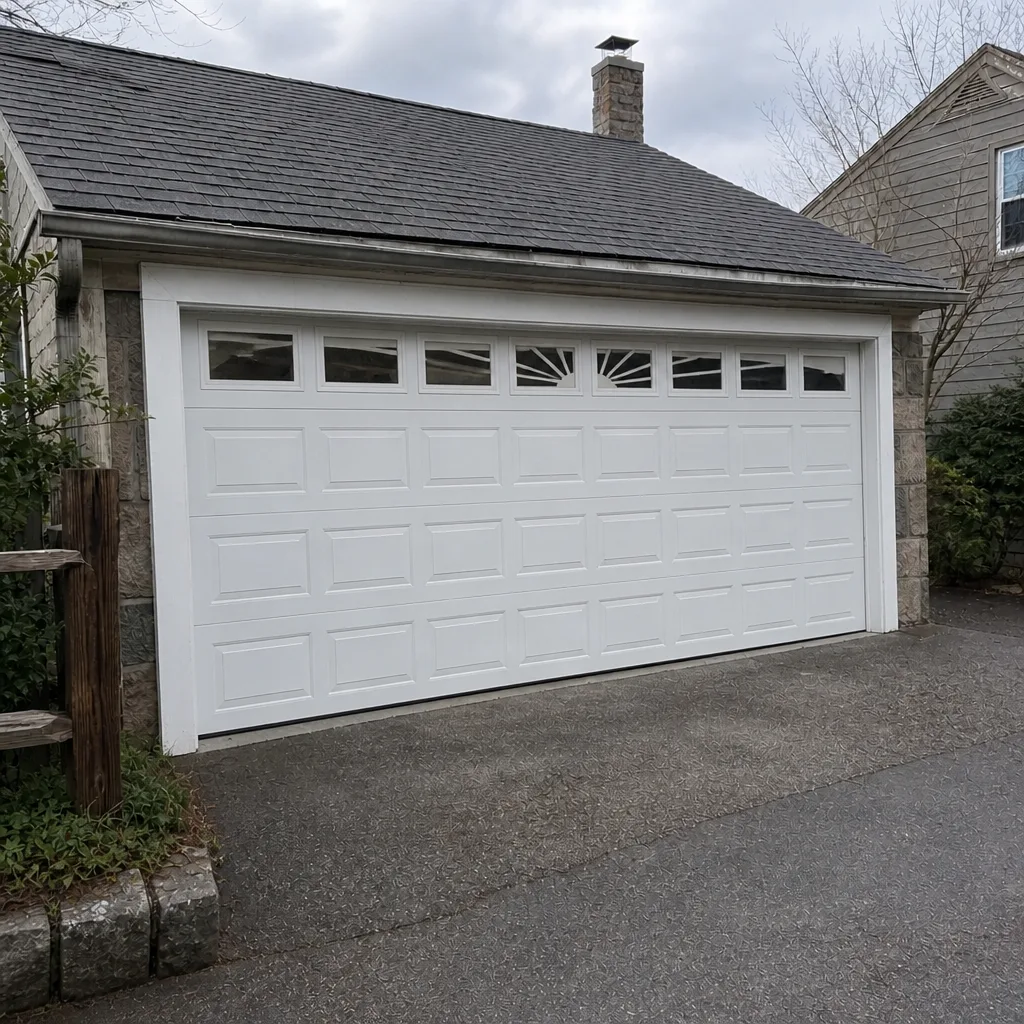 After
Common Mistakes to Avoid
- Pulling the manual release with the door open. This is the single most common mistake. The full weight of the door comes down at once. Always pull with the door fully closed.
- Forcing a stuck door down. A door stuck mid-travel usually has one problem, and forcing it typically creates several. Bent tracks, cracked panels, and a stressed opener are the usual results, and they cost more to fix than the original issue.
- Testing the door balance by hand without disconnecting the opener. The opener masks a weak spring. Test with the door disconnected, and if it feels heavy, stop.
- Ignoring the bottom seal before a nor’easter. A worn seal lets horizontal rain straight into the garage. In Stamford, that’s the difference between a dry garage and a wet one after a storm.
- Assuming a battery backup will work when you need it. Battery backup openers only help if the battery has been tested recently. A three-year-old battery that’s never been checked is a false sense of security.
- Storing the remote only in the car. If the car is trapped, so is the remote. Keep a spare inside the house.
- Treating a snapped spring or a loose cable as a DIY problem. These components are under extreme tension and can cause serious injury. Stop and call.
When to Call a Professional
Call a professional when the door won’t lift by hand after the manual release, when you hear a bang from the spring area followed by a door that won’t open, when a cable is visibly loose or off its drum, when the door is stuck mid-travel and you can’t see why, or when the door has come off its track. These are all situations where the safe assessment is done by a trained technician. Our technicians have up to 8 years of experience, and garage doors are the only thing they work on. Clover Garage Door Service offers free estimates in Stamford, call (855) 632-3568. We answer 24/7. Fast dispatch from 7am to 7pm, Sunday through Friday. The price is quoted and agreed before any work starts, so the written estimate sets the final number.
Frequently Asked Questions
Use the manual release cord on your opener, but only after confirming the door is fully closed, then lift the door by hand. If you have a battery backup opener, try the wall button first. If the door doesn’t lift by hand or feels heavier than usual, stop and call a specialist. Call (855) 632-3568 for an exact quote, estimates are free.
Yes, if the battery has been tested recently. A backup unit keeps the door operating for a limited number of cycles during an outage, which is often enough to get the car out. Test it once a season so you know it works when the power goes. Call (855) 632-3568 if you want the system checked.
Stop pressing the button and assess visually: look at the tracks, the springs, and the cables, and don’t force the door. A stuck door usually has one underlying problem, and forcing it can bend tracks and crack panels. If you can’t see the cause, call (855) 632-3568, estimates are free.
No. A broken spring means the door is being held partly by the opener, and releasing it can bring the full weight down. Leave the door as it is and call a trained technician. Springs and cables are under extreme tension and can cause serious injury. Call (855) 632-3568.
It can let significant wind-driven rain in, yes. The bottom seal takes the brunt of horizontal rain in a Stamford nor’easter. A new seal is inexpensive and is the easiest weather protection you can add before storm season. Call (855) 632-3568 for an exact quote, estimates are free.
Our technicians are trained specialists, garage doors are all they do, and we service eight major brands: LiftMaster, Chamberlain, Genie, Clopay, Amarr, Wayne Dalton, Craftsman, and Raynor. Our technicians have up to 8 years of experience. Call (855) 632-3568 with your model number and we’ll tell you exactly what we can do.
The Bottom Line
Garage door emergency readiness in Stamford comes down to knowing three things before the storm hits: how your specific opener’s manual release works (and to only use it with the door fully closed), what’s in your garage kit (a flashlight, a card with your model number, and gloves get you a long way), and when to stop and call. A door stuck mid-travel or a suspected broken spring is a call to a trained specialist, not a job to force. Do the prep once, test the battery backup, replace a worn bottom seal, and the next nor’easter is a lot less stressful. Ready to get your door storm-ready? Call (855) 632-3568 for a free estimate.
Written by the team at Clover Garage Door Service.